You searched for "Vascular"
Coblation for lingual haemangiomas
Haemangiomas are benign vascular tumours characterised histologically by a marked proliferation of blood vessels. They can be either congenital or acquired, and can affect the tongue, both within the oral cavity and the oropharynx. A variety of interventions exist for...
Genetics of IP-III
The authors provide a literature review of the genetic basis and clinical features of incomplete partition (IP)-type III. The condition is seen typically in males and is due to mutation in the POU class 3 homeobox 4 (POU3F4) gene which...IOS 2026
The 67th Meeting of the Irish Otorhinolaryngology / Head & Neck Society will take place on 9 – 10 October 2026. Early bird registration is now live on the Irish Otolaryngology Society (IOS) website!The IOS President, Keith Trimble, has chosen...
Microvascular surgery - does size matter
Success rates for microvascular free tissue transfer performed for head and neck reconstruction are currently very high. As the recipient vessel diameter decreases, questions of reliability and ease of access are raised. This retrospective analysis looked at 89 flaps in...
Use of angular vessels in head and neck free-tissue transfer – a comprehensive preclinical evaluation
Free tissue transfer (FTT) has transformed the capabilities in head and neck reconstruction. Rotational and pedicled flaps are limited by the pedicle length, the type of tissue required and the size of the defect. FTT helps lessen the impact of...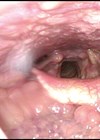
Virtual chromoendoscopy (VCE)
‘That’s a funny looking lesion on the larynx, it’s probably benign, but I should take a biopsy.’ Liz Ross and Ajith George discuss whether virtual chromoendoscopy will change this thought process. What are the origins and ENT applications? Traditional chromoendoscopy...
What are the non-inflammatory causes of a conductive loss?
This retrospective study looked at patients with an intact tympanic membrane with non-inflammatory causes – i.e. otitis media and cholesteotoma. They document their findings based on exploratory tympanotomy. They operated depending on the findings with either a stapedectomy or a...
Conductive hearing loss – when and why to scan
Ossicular fixation or discontinuity can occur at any point along the ossicular chain and is estimated to cause conductive hearing loss (CHL) in approximately 55% of patients. Computed tomography (CT) imaging of the temporal bone identifies bony pathologies that contribute...
Is there increased cardiovascular risk with macrolide antibiotics?
This month’s Ed’s Choice delightfully reviews the potential cardiovascular consequences of long-term macrolide use in the treatment of chronic rhinosinusitis. This used to be one of my ‘go-to’ topics of conversation at home after a bad day at work, although...
Voice therapy is an effective treatment for presbyphonia
The quality of an individual’s voice often declines with age. This deterioration occurs firstly as a result of vocal fold atrophy secondary to histologic alteration of the vocal fold mucosa as well as atrophy of the laryngeal musculature. Phonatory efficiency...Scotland’s first UKAS accreditation for paediatric audiology
The United Kingdom Accreditation Service (UKAS) has granted Scotland’s first accreditation against the Improving Quality In Physiological Services (IQIPS) standard. The award was made to the Audiology Department at NHS Tayside and covers both adult and paediatric audiology services delivered at four hospitals in Dundee, Perth and Brechin.