
You searched for "prevention"
British Academy of Audiology Higher Training Scheme – Head of Service and trainee perspectives
For Jan/Feb 2022, we continue with the topic of the British Academy of Audiology Higher Training Scheme. We hear from Jane Beavan, Clinical and Professional Lead for Audiology/Clinical Scientist in Audiology, and Kim-Maree Collings, Senior Audiologist, from the Countess of...In conversation with Gregory W. Randolph, President of the AAO-HNS
The American Academy of Otolaryngology – Head and Neck Surgery (AAO-HNS) is the world’s largest otolaryngology, head and neck surgical organisation. Declan Costello caught up with its new President, Dr Gregory W. Randolph. Dr Gregory W. Randolph. Congratulations on your...
What is the right balance to strike in the management of anaplastic thyroid cancer?
This is a pragmatic article on a difficult and much debated subject. Management of anaplastic thyroid cancer (ATC) can feel like making decisions between a rock and a hard place, and this article suggests one path to help navigate some...In conversation with Trevor McGill
After more than four decades of paediatric clinical practice, Trevor McGill shares his wealth of experience and knowledge with Pat Bradley. Trevor, as a national and internationally acknowledged Paediatric Oto-Rhino-Laryngologist, Head and Neck Surgeon, to what do you owe this...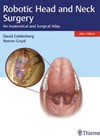
Robotic Head and Neck Surgery: An Anatomical and Surgical Atlas
I was excited to receive and review this book. Unfortunately I was disappointed to discover the strange paperback spirally bound exterior, which the publisher’s website states makes it robust. It looks anything but robust and, as an intended textbook to...Beyond blocked noses: paediatric olfactory dysfunction for the ENT surgeon
Smell loss in children often goes unnoticed. Recognising the signs, understanding the causes and improving access to assessment could transform care. The hidden epidemic: why smell matters in children When a child presents with nasal obstruction, we instinctively look for...Barrier and opportunities for hearing care: finding a way forward for all
Ideal models of care for communities can include tailored ear and hearing care interventions. Barriers exist at an individual and societal level to realise the vision of hearing care for all, regardless of country or resource setting. Affordability of hearing...Barrier and opportunities for hearing care: finding a way forward for all
Ideal models of care for communities can include tailored ear and hearing care interventions. Barriers exist at an individual and societal level to realise the vision of hearing care for all, regardless of country or resource setting. Affordability of hearing...
A bittersweet finding
This is an elegant study, documenting the role of, and activation of, nitrous oxide in chronic sinusitis. Bitter taste receptors (TR2) have recently been identified as novel ‘players’ in sinonasal innate immunity and in chronic rhinosinusitis. The receptors are triggered...
Clinical Management of Swallowing Disorders, Third Edition
This is a comprehensive and readable text on swallowing disorders. The covered topics include the physiology of normal swallowing, aetiologies and mechanisms of abnormal swallowing, as well as assessment and management (including surgical, prosthetic and non-surgical). There is a detailed...Surgical technology and operating room safety failures: lessons from vascular and general surgery
Background – surgical technology and otolaryngology An estimated 234 million major surgical procedures are performed annually worldwide. This requires the interaction of multidisciplinary teams with varying contributions of surgical technology and therefore makes surgical procedures prone to multiple sources of...


