
You searched for "facial"

How AI is expanding accessibility for people with hearing loss in speech-to-text apps
In hospitals and clinical environments where masks are required, deaf and hard-of-hearing individuals continue to experience additional barriers due to the absence of visual cues. Similarly, large in-person meetings, virtual sessions, classrooms and lectures can be difficult to navigate when...Nuclear heads – and necks
Imaging of the extra-cranial head and neck is challenging due to the anatomic complexity of the region. CT, MRI and ultrasonography (US) are amongst the most frequently utilised radiological modalities in head and neck imaging but do not always provide...From the editor MayJun 2020
Declan Costello, MA, MBBS, FRCS(ORL-HNS), Editor, ENT & Audiology News; Consultant Ear, Nose and Throat Surgeon, Wexham Park Hospital, Slough, Berkshire, UK. E: d.costello@nhs.net We are living in extraordinary times. As I write this message, the COVID-19 pandemic is just...First ever World Report on Hearing
With less than three weeks to go, the countdown has begun to the launch of the first ever World Report on Hearing on World Hearing Day, 3 March 2021. Through the global launch of the report, WHO intends to reach,...Audiology in this issue...Age-related Hearing Loss and Dementia
GUEST SECTION EDITOR Barbara E Weinstein, PhD, Professor and Founding Executive Officer Health Sciences Doctoral Programs, Graduate Center, CUNY, Adjunct Assistant Professor of Medicine, NYU Langone Medical Center, New York, USA. E: bweinstein@gc.cuny.edu The prevalence of dementia is escalating worldwide,...From the editor JulyAugust 2022
Declan Costello, MA, MBBS, FRCS(ORL-HNS), Editor, ENT & Audiology News; Consultant Ear, Nose and Throat Surgeon, Wexham Park Hospital, Slough, Berkshire, UK. E: d.costello@nhs.net One of the joys of attending meetings and conferences is the chance to catch up with...Sybill Storz 1937 - 2025
Sybill Storz. Surrounded by her closest family, the internationally-renowned Tuttlingen entrepreneur Sybill Storz passed away peacefully on 28 November 2025 at the age of 88. Her family, all the employees, and the Supervisory Board of the family-owned MedTech company KARL...IFOS 2023: from state-of-the art science to global inequalities
The Dubai World Trade Center will open its doors on 17 January 2023 to welcome delegates to the IFOS 2023 World ENT Congress.Paediatrics
Ray Clarke, Clinical Sub-dean, Alder Hey Hospital, Liverpool, UK. Prof Liat Kishon-Rabin, PhD, Dean of Innovation in Teaching & Learning; Professor of Communication Disorders, Tel Aviv University, Israel; President (2021-2023) of the European Federation of Audiology Societies (EFAS). E: lrabin@tauex.tau.ac.il...Young ESPO – looking back and looking ahead
In 2018, after the virtual ESPO Marseille meeting, a new committee of ESPO Juniors was established. Last year, the name was changed to Young ESPO.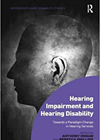
Hearing Impairment and Hearing Disability – Towards a Paradigm Change in Hearing Services
I offered to review this book hoping to gain some helpful and insightful tips for an assignment that I have been working on. The title implies that the book will give practical tips and strategies for helping to deliver service...


