
You searched for "Wounds"
Jameel Muzaffar, Anne Schilder and James O’Hara
In a follow-up to the interview with Anne Schilder back in 2016*, Jameel Muzaffar speaks to Anne and to James O’Hara about the current research landscape in ENT in the UK. *Banerjee A. In conversation with Professor Anne Schilder. ENT...
Button batteries – how can we reduce harm to children?
This article explores the history of button batteries and how clinicians and industries alike could reduce the harm to children following ingestion. Following ingestion, if lodged, button batteries cause an alkaline reaction leading to necrosis of mucosa. Significant oesophageal injury...
X-ray vs. intraoperative testing for determining cochlear implant placement
Most cochlear implant centres confirm electrode position after surgery using X-rays to ensure optimal electrode placement. As well as transorbital view X-rays, this team check placement using impedance measures and neural response telemetry (NRT) performed intraoperatively. The former indicates whether...In conversation with Professor Janet Wilson
As she approaches her retirement from clinical practice, Professor Janet Wilson speaks to our Editor (and fellow laryngologist) Declan Costello about surgical training, research, diversity, literature and the future. You have had an immensely successful career in ENT – how...ENT In this issue...Landmark Papers that Defined ENT and Audiology
In 2018, I compiled a book with the title Landmark Papers in Otolaryngology. The book was inspired by the ENT department journal club that regularly took place in a local Norwich pub, and it discusses 99 of the most cited papers in the ENT and audiology literature.Voices: In conversation with Nick Coleman
Nick Coleman is an author and journalist who has written for several national newspapers and music magazines. Following sudden unilateral deafness in 2007, he wrote The Train in the Night, which describes his experience of hearing loss, rehabilitation and what...
Communication in the age of universal masking: speech-to-text apps to the rescue
The ongoing COVID-19 pandemic has touched nearly every aspect of our lives, including how we interact with patients. At this point, it is almost hard to remember a time when we didn’t have to wear masks during clinical encounters. Though...
Atlas of Endoscopic Sinus and Skull Base Surgery
This surgical textbook has a target audience of otolaryngology consultants carrying out basic and advanced rhinological procedures. It is also suited to otolaryngology trainees and fellows. Although it would provide a useful reference text for otolaryngology consultants I found it...
Time and Life Management for Medical Students and Residents
Time and life management is not normally a skill we are taught growing up. As we grow from being a child to an adult, it is inevitable that we become independent managers of our time and schedule. Most who end...
Instrumentation for Audiology and Hearing Science: Theory and Practice - Second Edition
This book is informative, with concise explanations of basic principles of physics and technology aiding the reader in understanding how these are related to instrumentation used within audiology and scientific aspects of hearing. A valuable text to have on the...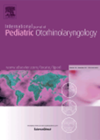
Predicting postoperative respiratory complications following paediatric adenotonsillectomy
This systematic review aimed to compare the presence of clinical features versus the polysomnography results in predicting major postoperative respiratory complications in children undergoing adenotonsillectomy for OSA. The study was prepared according to the PRISMA checklist. Overall 22 studies met...


