You searched for "stimulation"
Bringing ear care and hearing services to the hardest to reach: the potential of primary healthcare workers
Can workers from the local community plug the workforce gap in providing ear and hearing care? Bringing ear and hearing care services closer to the community remains a key component of reducing the burden of ear and hearing conditions across...Malignant lesions and reconstruction of the pinna
External ear reconstruction can be challenging. Baskaran Ranganathan and Amr Abdelhamid describe how careful assessment, planning and surgery following the subunit principles and reconstructive ladder will ultimately lead to good aesthetic outcomes with restored form and function. The external ear,...Why screen for hearing loss in adults?
Introduction Hearing loss affects over 10 million people in the UK – one in six of the population. Of over 50-year-olds 41.7% are estimated to have some form of hearing loss. This rises to 71.1% of over 70-year-olds, over half...The development of endoscopic sinus surgery – a meeting of three great minds
The story of the development of endoscopic sinus surgery is inextricably linked with the names of Stammberger, Messerklinger and Storz. Karl Storz’s daughter, Sybill Storz, tells us more. We would like to take this opportunity to express our appreciation of...General overview of endoscopic ear surgery: advantages and principles
The philosophy of endoscopic ear surgery presents surgeons with a tricky concept – does the magnificent view make up for the fact I need to operate with one hand? In this article, Jane Lea discusses the advantages of operating transcanal...Whale hearing tests through evoked potential audiometry
Covering over 70% of the earth’s surface and reaching known depths of 11km, the world’s oceans tick the box for an extreme environment. What do we know of the impact of environmental noise on the deep-sea dwellers of this habitat?...The history of person-centred hearing care
In the World Report on Hearing, launched by the World Health Organization (WHO) on 3 March 2021, the use of person-centred care is highly recommended. In this article, we learn about the history of person-centred healthcare and hearing care. But...The ear-brain connection: the role of cognition in neural speech processing
Audiologists and other hearing healthcare professionals have become increasingly interested in the importance of cognitive function in the assessment and management of hearing loss, especially in light of evidence suggesting a link between hearing loss and cognitive decline in older...
Assessing post-extubation dysphagia on the intensive care unit
The incidence of post-extubation dysphagia (PED) is reported to be about 12% in the general ICU population and around 18% in patients admitted to ICU as emergencies. PED was found to be an independent predictor of 28-day and 90-day mortality....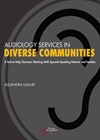
Audiology Services in Diverse Communities: A Tool to Help Clinicians Working With Spanish-Speaking Patients and Families
As a bilingual audiologist (Spanish-English), I have found this book to be a bridge between the two languages in the audiological world. It is a resourceful niched book that enables the practising audiologist dealing with Spanish-speaking adult and paediatric patients...