
You searched for "parents"
By the people, for the people: a multidisciplinary facial nerve clinic with a difference
Facial nerve palsy is regularly seen in ENT clinics. Underlying diagnoses are excluded, and the patient is often then discharged to ‘see how it goes’, with or without an ophthalmology referral. Here, Catherine Meller describes how she and her team...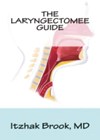
The Laryngectomee Guide
As a Macmillan Head and Neck Specialist Nurse, I was very pleased to be asked to review this book, The Laryngectomee Guide, by Itzhak Brook, MD. It is fair to say that for most laryngectomy patients, life does go on...
Which patients are more likely to have postoperative pulmonary complications after major head and neck?
Postoperative pulmonary complications (PPC) following major head and neck surgery are frequently encountered. Indeed, surgery in the head and neck area itself has been identified as a risk factor for these complications. Microvascular reconstruction is a widely accepted and proven...
Measuring is understanding: an unsupervised PROM clustering of CRS patients
It has been clear for quite some years, at least for anyone dealing daily with chronic rhinosinusitis (CRS) patients, that CRS is an ‘umbrella’ diagnosis. There are significant differences between patients, including different demographic data, different endoscopic and radiographic images,...
Which graft is better for type 1 tympanoplasty in elderly patients?
Type 1 tympanoplasty is a procedure performed to repair tympanic membrane perforations, primarily to reduce otorrhoea. This may subsequently lead to improvement of hearing. The common graft materials used are temporalis fascia and cartilage from tragus or concha. The authors...
Compress to suppress the venous tinnitus
This interesting retrospective case series analyses the effectiveness of a modified surgical technique with retromastoid reconstruction of the sigmoid sinus by mechanical compression with Surgicel and bone wax packing under local anaesthesia for patients with venous pulsatile tinnitus related to...
How are swallowing and voice affected following anterior cervical discectomy and fusion (ACDF)?
Anterior cervical discectomy and fusion (ACDF) requires an anterior transcervical approach (ACA) to allow decompression of the cervical spine and nerve roots. This approach is also occasionally used for corpectomy and osteophyte removal. Key neurovascular structures related to swallowing and...
Epley Manoeuvre: number of times it is required and its diagnostic value
Benign paroxysmal positional vertigo is a common condition but if inadequately treated or wrongly diagnosed, can prolong the distressing symptoms of momentary dizziness, nausea and visual disturbances which can be due to other causes and deteriorate quality of life. Studies...
Role of non-echo planar diffusion weighted magnetic resonance imaging in detection of cholesteatoma
Whilst the method of canal wall down and same-session reconstruction is emerging to be more popular, canal wall up procedures are still performed. In either, it is necessary to ensure eradication of cholesteatoma or detect its recurrence. The reliability of...


