
You searched for "ventilation"
Developing ENT services in Zambia
Lufunda Lukama and Matthew Clark. Lufunda Lukama is an ENT surgeon in Zambia. In a country of 19.6 million, he is one of five such specialists. It is not difficult to see the problem that he, and the country as...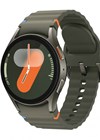
Wearable tech revolutionising sleep monitoring: a new era in sleep health
Restful sleep is crucial for health but conditions like obstructive sleep apnoea (OSA) can significantly disrupt it, leading to fatigue, cardiovascular issues, and other serious health problems. Polysomnography (PSG) remains the gold standard for OSA diagnosis [1], however it is...Making the case for multidisciplinary ENT vasculitis clinics
How can combined ENT vasculitis clinics improve diagnosis, treatment and ongoing care for patients with AAV? This article outlines a multidisciplinary approach. Antineutrophil cytoplasmic antibody (ANCA)-associated vasculitides (AAV) are a group of rare autoimmune conditions characterised by inflammation of small-...Branchio Oto Renal syndrome
Branchio Oto Renal Syndrome (BOR) is an autosomal dominant disorder with branchial, otologic and renal manifestations. The presence of clinical signs varies among and within affected families. Three causative genes for BOR syndrome have been reported thus far: EYA1, SIX1...ENT Training: a Singapore perspective
I recently had the opportunity to participate in a week’s observation with Associate Prof Thomas Loh, a head and neck surgeon with a special interest in nasopharyngeal carcinoma at the National University Hospital of Singapore (NUHS). What was striking from...AUDIOLOGY - In conversation with Dr Jerry Northern
Gareth Smith chats with Dr Jerry Northern and learns about his fascination with Mount Everest, the legendary Marion Downs and his unique career in audiology… Jerry with the legendary Marion Downs. Tell us about your background, how did you come...
Vertigo: Clinical Practice and Examination
This textbook offers a straightforward overview of vertigo management. It is easy to read. There are 25 references but I cannot see that they are cited in the text. I find it difficult to identify who the audience would be...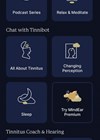
App-solute relief: tackling tinnitus with your smartphone
The sound experienced by individuals with tinnitus can vary to a huge extent. It can range from a mild occasional ringing to a constant, loud noise causing disruption to daily life and sleep. Reassuringly, tinnitus is rarely a sign of...
Moving towards implanting children below 12 months of age
Newborn hearing screening has ensured that deaf infants are identified soon after birth so that habilitation can begin as early as possible. Cochlear implantation is a key component of early intervention for some children, but it is often not performed...


