You searched for "ventilation"

A faster way to manage patients with swallowing disorders with enhanced role of speech and language therapists
Allied health professionals (AHPs) make up the third largest clinical workforce in the NHS. They represent a diverse group of registered professions who play a vital role in the health service, working across various settings and with all age groups....
Tinnitus in children
This is a review article about the management of tinnitus in children. In the end the authors came up with just three papers that made the grade. Maybe the most interesting finding was from Vianni in the JLO in 1989....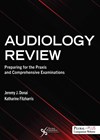
Audiology Review: Preparing for the Praxis and Comprehensive Examinations
This book is a well-structured and thoughtfully compiled resource aimed at students preparing for audiology examinations. While primarily tailored to the Praxis exam in the United States, its content remains broadly applicable to an international audience, including students in the...In conversation with Professor Charles Liberman
Just before I left Cambridge to work with the Hearing Sciences group in Nottingham, I spent a very happy hour alone in the company of Professor Charles Liberman, the Director of the Eaton-Peabody Laboratories based at the Massachusetts Eye and...
Milestones profile for children with cochlear implant
Over the last eight years, Nottingham auditory implant programme have developed and validated a profile of auditory milestones for use with children receiving bilateral cochlear implants under the age of two years. The structure of the Nottingham Auditory Milestones profile...
PPPD - the problem with the label
The recently described diagnostic entity of persistent postural perceptual dizziness (PPPD) has its merits regarding guiding intervention and treatment, but the label itself can be problematic for patients. This study was designed to determine the views of patients of the...
Chin up, doc! A few simple manoeuvres could make all the difference in FNE
Flexible nasendoscopy (FNE) is an ENT surgeon’s bread and butter. It is integral and often considered superior to conventional radiography in the assessment of laryngeal and pharyngeal cancers. However, it is not as simple as sticking the camera in and...
Argh! Facial pain! What to do??
We often come across patients with presentation of facial pain, but unless this is sinugenic in origin, our understanding and management of it can often be found wanting. Craniofacial pain is in fact highly complex and encompasses a wide range...
Persistent postural perceptual dizziness following stroke: the risk factors
The primary motivation for the study, as stated by the authors, was that the factors behind persistent postural perceptual dizziness (PPPD) have not been clearly determined in stroke patients. To that end, a prospective study of adults presenting to a...
Using evidence and international consensus to guide treatment of thyroid nodules
The authors of this practical review paper highlight a growing issue within thyroid surgery, where high-quality ultrasound has increased the detection of subclinical nodules: what do we do with the patient presenting with an ‘incidental’ thyroid nodule? This has both...
Can diet alone be used to treat laryngopharyngeal reflux?
In this crossover observational study, a low-fat, low-quick-release sugar, high-protein, alkaline, and plant-based diet was investigated as a single treatment for laryngopharyngeal reflux (LPR). Authors recruited 50 participants with demonstrated LPR on hypopharyngeal-oesophageal multichannel intraluminal impedance-pH-monitoring (HEMII-pH), off acid suppressive...