
You searched for "communication"
In conversation with AAA President, Jackie Clark
Jackie Clark, PhD, is a clinical audiologist, professor of audiology, and researcher. She is also the new President of the American Academy of Audiology (AAA). While on an annual working trip to South Africa, Jackie answered a few questions about...
Word-finding difficulties in Parkinson’s are as important as speech
Parkinson’s is typically considered to progressively affect speech and voice, with up to 89% of people with the diagnosis experiencing symptoms such as reduced articulatory coordination and a hoarse or breathy voice quality. Despite 80% of people with Parkinson’s experiencing...Teaching the art of cooking to a hearing impaired chef
Today catering is a hugely popular career choice for many people and there’s a new cookery competition or programme on our TV screens every week. But beyond the media glamour, the kitchen is a challenging and noisy working environment, in...RCSEd - Informed Consent: Sharing the Decision (ICONS)
The Royal College of Surgeons Edinburgh - Informed Consent: Sharing the Decision (ICONS)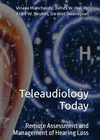
Teleaudiology Today: Remote Assessment and Management of Hearing Loss
The Covid crisis saw many audiology services, private and public, scramble to find other methods of continuing to deliver services to new and existing patients/clients. This textbook builds on international research that the authors published during that time and the...
Information to support decision-making: does it make sense online?
The internet has become a major source for health information, with many people preferring to use the internet to search for advice than speaking to health professionals. Yet much of the information available is very difficult to read for the...Hearing aids 2019: today’s technology
High-end or basic hearing aids: does the technology level make a difference? Catherine Palmer shares the current evidence base and suggests where hearing healthcare professionals can make the most impact. The most common complaint from individuals with mild-to-moderately severe hearing...
Balloons – more complicated than first thought?
This study describes the complications seen after balloon sinuplasty (BSP) - a commonly performed procedure (particularly in the USA where it is often performed as an office procedure) versus traditional functional endoscopic sinus surgery (FESS). The data source was a...
Predicting postoperative respiratory complications following paediatric adenotonsillectomy
This systematic review aimed to compare the presence of clinical features versus the polysomnography results in predicting major postoperative respiratory complications in children undergoing adenotonsillectomy for OSA. The study was prepared according to the PRISMA checklist. Overall 22 studies met...


