
You searched for "Imaging"

Is pan-endoscopy necessary to detect synchronous primary in upper aerodigestive tract cancer?
Diagnosis of head and neck cancer requires speed. It has also to be comprehensive in view of the possibility of synchronous primary cancer (SPC) associated with upper aerodigestive tract cancer (UADTC). Some centres still consider pan-endoscopy essential in the diagnostic...American Thyroid Association Thyroid Cancer Management Guidelines: utilising risk stratification to optimise patient care
The steep rise in thyroid surgery around the globe, has led to the development of risk stratification to define the indications for surgery and the extent of surgery as well as adjuvant therapies for papillary carcinoma, to avoid over treatment....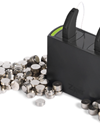
Industry update: rechargeable hearing aid batteries
They may be similar in size to a watch battery, but there is a drastic difference between the frequency with which hearing aid batteries need to be changed compared to the simple watch battery. Unlike a watch battery, which may...
Alcohol consumption and the risk of developing benign laryngeal disorders?
Alcohol consumption among South Korean adults is apparently high, with over three quarters of the adult population consuming alcohol and a ‘high-risk’ drinking rate of one in five. Excessive alcohol consumption is considered to be a risk factor for developing...
Preoperative prediction of pain outcomes in patients with trigeminal neuralgia
The authors of this retrospective study have developed a preoperative trigeminal neuralgia (TN) grading system for the preoperative prediction of long-term pain relief after microvascular decompression (MVD). Patients who had become refractory to or developed toxicity to carbamazepine or oxycarbamazepine...
Does Koos classification predict facial nerve dysfunction?
The Koos classification is a grading system used often for preoperative evaluation of acoustic tumours on imaging studies. It indirectly correlates to the size of the tumour. Size of the vestibular schwannoma is often considered the main determinant for hearing...
Medical information required with requests for CT scans of the temporal bones; a two cycle audit
It is a common experience that radiology reports on the CT scans of the temporal bones do not always reach a diagnosis. Various studies have produced differing results in that detailed information may not be necessary to help reach a...Update on CEORL-HNS 2024
As I write this update, there are less than four months to go to the 7th Congress of European ORL Head and Neck Surgery in Dublin and the excitement is building.
No soup for you…! Early identification of postoperative perforation increases the success of conservative management
Iatrogenic perforation of the hypopharynx or cervical oesophagus is a well-recognised life-threatening complication. Previous studies have demonstrated that conservative management with broad-spectrum antibiotics and withholding oral feeding may avoid morbidity associated with surgical repair. This study addresses when conservative management...Audiology in this issue... The Changing World of Computational Audiology
Deborah Vickers, PhD, Principal Research Fellow in Hearing & Deafness, University of Cambridge, UK. E: dav1000@cam.ac.ukTwitter: @SOUNDLabCam / @DebiVickers_ / @BEARS_CIwww-neurosciences.medschl.cam.ac.uk/sound-lab/ Lorenzo Picinali, Reader in Audio Experience Design, Imperial College London, UK. E: l.picinali@imperial.ac.uk ENT & Audiology News Jan/Feb 2022...
Vascular disease and sudden sensorineural hearing loss
Oussoren et al performed a systematic review and meta-analyses of current literature on the above topic: specifically, cardiovascular risk factors for developing idiopathic sudden sensorineural hearing loss (iSSNHL), the presence of white matter hyperintensities in patients with iSSNHL and the...


