You searched for "obstruction"
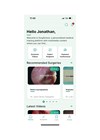
‘Cutting-edge’ surgical education: exploring the SurgSchool App
SurgSchool is an educational surgical app, where high-quality operations can be viewed with the surgeon’s commentary. It was founded in October 2023 by Enrique Casqueiro Cons, a civil engineer by trade with a background in business, and otologist Dr José...
Mobile apps for audiological screening
This article summarises the newly emerging mobile applications for audiological screening. The purpose is to try to reduce the time between individuals identifying a hearing problem and seeking help for it. These apps are gaining in popularity and recognition. The...
Maturation of BC attenuation
The aim of this study was to clarify the reason for differences between bone-conduction hearing in adults and infants. The authors investigated how the sound pressure level in the ear canal changes depending on the bone-conduction transducer placement. By using...
Does teaching affect patient satisfaction?
Teaching practice on real patients has several advantages in terms of lower costs and genuine clinical material but it is often a concern that using real patients for undergraduate teaching may result in patient dissatisfaction and many patients would prefer...
Military acoustic trauma: incidence and management
This is a retrospective study on the effects of acute acoustic trauma on the hearing thresholds of 225 military personnel. The main symptom after acute acoustic trauma due to firearm use was tinnitus. The authors consider it as the main...
Peer-support group for people with a hearing loss
Peer-support groups’ (PSGs) involvement in rehabilitation of people with different health issues can have a very positive impact on the patients’ wellbeing as showed in a various literature on the subject. This study involves analysis of data from previous studies...
How many friends will you have after a TBI?
Friendships are key to reducing stress and improving morale and social support. Loss of friendships after a traumatic brain injury (TBI) can have a significant impact on these areas of a person’s life. There is little in the research literature...