You searched for "singing"
Musical perception and the brain: In conversation with Charles Limb
One of the unique aspects of BACO 2020 will be a public engagement event. Charles Limb, an esteemed guest lecturer from San Francisco, will delve deep into the neurological experience of music. Who better than our very own Declan Costello...ERS-ISIAN-IRS Congress 2027
Seville – a path of light towards the future. The international rhinology community will come together in Seville in June 2027 for the ERS-ISIAN-IRS Congress 2027, bringing together clinicians, surgeons, researchers and allied specialists from across the world. This event...Ear, nose and throat surgery in children – where will it be in 15 and 50 years?
Michael Kuo, David Albert and Mike Saunders have put their collective heads together to predict the future of ENT surgery in children; will there be a rise in workload due to increasing survival of children with complex medical problems? Or...
Does pollution worsen inflammatory nasal problems?
This ambitious study, conducted over a period of four years, assessed 27,863 patients and compared levels of allergic rhinitis (AR) or chronic rhinosinusitis (CRS) with the levels of air pollution recorded, as assessed by levels of particulate matter (PM10). They...Untangling the emotional and physiological aspects of hyperacusis
In hyperacusis, the physiological and the emotional aspects can become deeply entwined. Dr Sarah Theodoroff draws us into her perspectives on this important aspect of the condition. Background Sounds and Emotions The basic act of hearing sounds triggers an emotional...
Translanguaging: an integrated and culturally valid approach for speech and language therapy practice
This study advocates the need for speech and language therapists to understand and advocate for translanguaging practices within their day-to-day clinical work with children with communication difficulties. Translanguaging derives from the Welsh term ‘trawsiethu’, which was first introduced in 1994...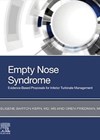
Empty Nose Syndrome: Evidence Based Proposals for Inferior Turbinate Management
To cut or not to cut, that is the question… The authors of Empty Nose Syndrome emphatically implore the reader to spare the inferior turbinate, lest they cause patients this undue misery! This book is a thought-provoking journey through the...
Standardising outcome measures in chronic rhinosinusitis
This international paper, involving the foremost rhinology departments worldwide aims to provide a standardised, agreed core outcome set for chronic rhinosinusitis, which has been designed to facilitate future meta analyses of published work in systematic reviews. Stakeholders included patients, ENT...
Assessment in ENT: Intra-operative videos
An article examining the reliability and validity of remote scoring; a video assessment of myringotomy and grommet insertion. The primary outcome measures were to determine construct validity (differentiating between different grades of surgeons) and reliability of video scoring. Unfortunately, the...
Role of non-echo planar diffusion weighted magnetic resonance imaging in detection of cholesteatoma
Whilst the method of canal wall down and same-session reconstruction is emerging to be more popular, canal wall up procedures are still performed. In either, it is necessary to ensure eradication of cholesteatoma or detect its recurrence. The reliability of...
Conductive hearing loss – when and why to scan
Ossicular fixation or discontinuity can occur at any point along the ossicular chain and is estimated to cause conductive hearing loss (CHL) in approximately 55% of patients. Computed tomography (CT) imaging of the temporal bone identifies bony pathologies that contribute...