
You searched for "registration"

Vascularised tissue in salvage total laryngectomy
Chemoradiation (CRT) has become the mainstay for locally advanced laryngeal cancer since the RTOG 91-11 trial. Unfortunately there is still a substantial demand for salvage laryngectomies, which have a higher complication rate, the most notable being pharyngocutaneous fistula (PCF). Several...
Diagnostic criteria for superior semicircular canal dehiscence syndrome
The latest Bárány Society’s consensus document on diagnostic criteria for vestibular disorders is one for superior semicircular canal dehiscence syndrome (SCDS). There are three major categories: (A) Symptoms consistent with a third mobile labyrinthine window; (B) Physiologic tests – clinical...Hyperacusis and autism spectrum disorder
Several different auditory deficits have been found to be co-morbidities of ASD. This article reviews literature with respect to the relationship between hyperacusis and ASD. Autism spectrum disorder (ASD) can be characterised as a neurodevelopmental condition that is marked by...
Endoscopic myringoplasty: a promising alternative to microscopic surgery
Endoscopes have revolutionised otitis media surgery in recent years and are increasingly used in the surgical management of cholesteatoma, sinus tympani pathology and facial nerve surgery. Despite this, the development of endoscopic myringoplasty and how this compares to its microscopic...From trauma to recovery: treatment at Defence Medical Rehabilitation Centre
This year (2014) is the centenary year of the beginning of the Great War. This conflict brought with it a cluster of emotional disorders that were called at the time, Shell-Shock. The present conflict in Afghanistan has been talked of...Hearing matters in New Year's Honours
Emeritus Professor David Kemp from the UCL Ear Institute, widely known for his discovery of otoacoustic emissions, has been made a CBE for services to auditory sciences and public health. Robert Nolan, chair of Deafblind UK, was awarded OBE for services to people living with deafblindness.
Occupational hazards affecting otolaryngologists
This is a questionnaire survey which received responses from 323 clinicians practising otolaryngology. The grades ranged from consultants to junior doctors. It was noted that nearly half of these respondents suffered from some form of musculoskeletal pain and it highlights...Nasal and aural foreign body removal: another technique for a common problem
Trying to remove foreign bodies from the ears and noses of children is something we have all struggled with at various times. Many people have their own top tips, and here Oliver McLaren and Alexander Walkden describe an ingenious way...The Patrick (Pat) Bradley Scholarship
The inaugural Patrick (Pat) Bradley Trainee Scholarship was launched at the recent regional East Midlands Cadaveric Dissection Course. Alex Charlton, an ST7 registrar on the East Midlands rotation will be the first recipient of this prestigious award.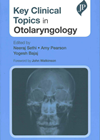
Key Clinical Topics in Otolaryngology
I am a ST6 registrar and, to review this book, I decided to use it as my primary revision guide for the exam and it did not disappoint. This book has all the hallmarks of a great adjunct for the...
Alive - an alternative anatomy
Gabriel Weston studied English as a first degree, and then trained in medicine. She entered an ENT registrar training programme and was then offered a book deal, so continued her clinical practice whilst writing. She subsequently appeared extensively on BBC...


