You searched for "parents"
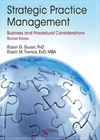
Strategic Practice Management – 2nd Edition
I was very pleased to take on the task of reviewing this book as I support Starkey’s Business Development Partnership Programme set up to support the UK and Irish Independent sector and to encourage audiologists to run their own businesses....Innovia Medical Launches ENT Vent Tube Range into the UK and EU Market!
Innovia Medical has expanded their range of ENT Vent Tubes to the UK and EU markets!Tribute to the late Douglas Pitman, Founder DP Medical
Rob Atkinson, Chief Executive of DP Medical Systems, said: “It is with great sadness that we announce the recent death of our company founder and namesake, Douglas Pitman, on Saturday 6 September 2025, after a long illness. The late Douglas...Young ESPO’s thoughts about ESPO and the future of paediatric ORL
ESPO, and paediatric ORL in general, has a long tradition of encouraging our younger colleagues. This has led to innovative developments in clinical work, in research endeavours and in how paediatric ORL educational events are run. This article outlines some...Operating abroad
I have always taken the view that one is better operating in a familiar environment, with scrub-nurses and anaesthetists that one knows, to say nothing of the equipment required and, most importantly ensuring the most appropriate pre- and postoperative care...
Dizzy Me: Light on Balance
This book is unlike any academic text I have read before. It was not at all what I was expecting; the book aspires to be a “handbook for doctors [and a] guide for patients” but certainly takes an innovative, if...
Epley manoeuvre angles
Posterior canal benign paroxysmal positional vertigo (PC-BPPV) is a common vestibular cause of dizziness regularly encountered in the outpatient clinic. The condition is often diagnosed with a positive Dix-Hallpike manoeuvre (DHM) – turning the patient’s head 45 degrees to the...Advanced in-office awake rhinology
In-office awake rhinology transforms sinonasal care, offering safe, cost-effective, minimally invasive procedures with rapid recovery and high patient satisfaction. In recent years, the landscape of otolaryngological surgery has undergone a remarkable transformation with the advent of in-office awake surgical procedures....
Revising pinna embryology and anatomy
This forms an introductory article for a group of papers discussing the reconstruction of the pinna. It is a succinct yet adequately detailed article that all of us, at whatever stage of our careers should endeavour to read, as it...
Gardasil vaccination as an adjuvant treatment for established recurrent laryngeal papillomatosis in male adults - does it stimulate an immune response?
Recurrent respiratory papillomatosis (RRP) is well known to be caused by infection with the human papilloma virus (types 6 and 11). Recurrence after surgical removal is common and potentially frequent and severe. Previous research has established that many patients with...
Predicting CSF leaks pre FESS: Gera classification - a new tool?
An interesting study from Italy looking at an anterior skull base classification that may be useful in predicting risk of intraoperative CSF leak during FESS surgery. Traditionally we have used the Keros classification system, developed in 1962 to categorise olfactory...