
You searched for "testing"
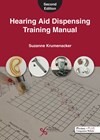
Hearing Aid Dispensing Training Manual - Second Edition
This text focuses on preparing US trainee hearing aid dispensers for their state practical exams, and the content is tailored to addressing the key assessment criteria. However, the basic topics covered are useful for hearing aid dispensers and potentially audiology...
Predicting the need for salvage laryngectomy
The treatment of laryngeal cancer has seen a shift towards organ preservation strategies with non-surgical treatment offering equivalent survival outcomes. Nonetheless, salvage total laryngectomy (SLT) remains an important curative management option in cases of treatment failure or recurrence. The authors...Being comfortable with the uncomfortable: ENT emergency simulation
When uncommon emergencies create uncertainty, simulation-based training offers a safe space to build confidence, competence and collaborative learning. ENT emergencies can be daunting to manage, especially for those who have less familiarity with their nature. Colleagues from neighbouring specialties are...From the editor Nov/Dec 2025
Declan Costello, MA, MBBS, FRCS(ORL-HNS),Consultant Ear, Nose and Throat Surgeon, Wexham Park Hospital, Slough, Berkshire, UK. TW / X: @Voicedoctor_uk For ENT&A Nov/Dec2025, we are delighted to celebrate the remarkable educational institution ENT Masterclass®, which marks its 20th anniversary with...In conversation with Professor Gerry O’Donoghue
On the occasion of his retirement from the Nottingham Auditory Implant Programme, we discuss his pioneering work in cochlear implantation and the challenges involved. ENT News author picture, 1993. Why did you choose a career in ENT? I started off...Obituary: John Noel Gleave Evans (1934-2022)
John Noel Gleave Evans DLO FRCS, formerly consultant otolaryngologist to St Thomas’ Hospital and Great Ormond Street Hospital for Children, died peacefully at home on 27 March 2022 at the age of 87.
Reducing the risk of Frey’s syndrome after parotidectomy – which methods are best?
Gustatory sweating or Frey’s syndrome is a well-recognised complication of parotid surgery. The reported incidence is highly variable, from 4% to 96%, with around 30% of patients reporting symptoms. A number of intraoperative techniques can be used to reduce the...Allergy – what’s in a name?
Allergy is defined as an “abnormal immune reaction to an ordinarily harmless substance” [1], however the meaning of the word has taken many forms since its introduction in 1906 by Austrian Paediatrician and Immunologist, Clemens von Pirquet [2]. Combining his...RSM ‘Otology Dragon’s Den’
The Royal Society of Medicine Otology Section recently held an ‘Otology Dragon’s Den’ event. Following on from our interview with Professor Gerry O’Donoghue, RSM Otology Section President, in the run-up to this event, we interviewed Steve Broomfield, Consultant Otologist in...Winners announced for 2024 Hearing Technology Innovator Awards
Hearing Health & Technology Matters (HHTM), an online resource for hearing professionals and consumers with hearing loss, has today revealed the winners of its fifth annual Hearing Technology Innovator Awards™. Through this esteemed awards programme, HHTM continues to honour innovation...


