You searched for "future"
Exploring teenagers’ access and use of assistive hearing technology
Children require good signal-to-noise ratios for optimum listening and learning. The use of remote microphone technology can be of benefit, yet older children often resist using it. Jennifer Groth reviews the challenges facing older children in the use of remote...Pathways for becoming an audiologist in the USA: Part 2. Academic and licensure requirements today
Part 1 of this topic is available here. Professor Hall reviews current requirements for practising audiology in the USA; audiologists must have a Doctor of Audiology degree from an accredited university programme and a licence in the state where they...Hidden hearing loss in humans
Awareness of cochlear synaptopathy (‘hidden hearing loss’) is growing. Chris Plack gives us an introduction to the condition, defining it and reviewing recent research in humans and animals with respect to noise exposure. The main cause of hearing loss is...Addressing ear and hearing care through task sharing: the Malawian experience
How can ear and hearing care be addressed in a setting with limited resources? Wakisa Mulwafu, Chris Prescott and Johan Fagan present an innovative model for training ear surgery technicians to perform endoscopic myringoplasty under local anaesthesia on a large...European Laryngological Society (ELS) meets British Laryngological Association (BLA)
The meeting of the European Laryngological Society in May is being held in London, and is co-hosted by the British Laryngological Association. The President of the ELS, Ricard Simo, and the Secretary of the BLA, Declan Costello, exchanged thoughts about...In conversation with Professor Gerry O’Donoghue
On the occasion of his retirement from the Nottingham Auditory Implant Programme, we discuss his pioneering work in cochlear implantation and the challenges involved. ENT News author picture, 1993. Why did you choose a career in ENT? I started off...Changing perceptions in head and neck cancer management caused by quality of life issues
Sir Felix Semon was an outstanding clinician and exceptional laryngologist. The money raised by donations from his colleagues on his retirement in 1909 was used to establish the London University’s Semon Lecture. Semon’s Obituary in the BMJ, reads: “In Semon's...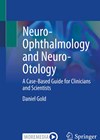
Neuro-Ophthalmology and Neuro-Otology: A Case-Based Guide for Clinicians and Scientists
As Daniel Gold points out in his preface, the idea for this title was borne from the observation that, despite the considerable overlap between the fields of neuro-ophthalmology and vestibular neurology, there is no single text that marries these two...