You searched for "disabilities"
Inter-professional teamwork and hearing care for older adults with cognitive loss
There is growing awareness that hearing loss is linked to dementia [1]. The average first-time hearing aid user is about 70 years old. By this age, approximately 1 in 2 people have hearing loss and 1 in 7 have cognitive...Audiology in this issue...Amplification 2019
Gareth Smith, MSc, AuD, Consultant Clinical Scientist (Audiology), Southend University Hospital, UK. E: Gareth.Smith@southend.nhs.uk In previous areas of the Audiology Features Section, this theme would have been called ‘Hearing Aids’. With the increased interest in ‘over-the-counter’ or ‘direct-to-consumer’ devices, we...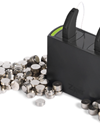
Industry update: rechargeable hearing aid batteries
They may be similar in size to a watch battery, but there is a drastic difference between the frequency with which hearing aid batteries need to be changed compared to the simple watch battery. Unlike a watch battery, which may...DP Medical partners with Neuranix to bring groundbreaking audiology diagnostic technology to the UK and Ireland
Leading healthcare supplier, DP Medical Systems, has joined forces with Neuranix to bring a brand new, innovative audiology diagnostic device to the UK and Ireland.Acquisition of Asensus Surgical by KARL STORZ
Asensus Surgical, Inc. a global leader of innovative digital solutions for the operating room, announced on August 22, the closing of the merger with the KARL STORZ Group.Beware of Bicycle Face!
Many of us were told as children that we would get square eyes from watching too much television. But spare a thought for those late Victorian ladies, embracing their first taste of liberty on a bicycle, who were threatened with...
Talking through technology – keeping up with the mainstream
Augmentative and alternative communication (AAC) system development has often made early use of innovative technology. Touch screens have been a part of this technology for some time. In fact, touch screens were invented in 1965 but it wasn’t until the...
Speech analysis via mobile phone – is there an app for that?
Experienced ENT surgeons will often be able to discern the likelihood of significant laryngeal pathology in a patient referred with dysphonia by the sound of their voice during the initial history-taking phase of a consultation. With the move earlier in...