You searched for "cranial"
Discovery in the genetics of complex disease: Otitis media
Otitis media (OM), a common disease of childhood, is considered to be a complex trait with multiple genetic and environmental factors expected to contribute to a child’s risk of developing recurrent acute OM (rAOM; ≥3 episodes in 6 months or...Audiology in this issue...Hyperacusis (Jan/Feb19)
Audiologists, otologists, and auditory neuroscientists are accustomed to dealing with problems of hearing loss but, until recently, little attention has been given to the experience of hearing sound too intensely. This experience is variously given the names hyperacusis, and reduced or decreased sound tolerance, and the affected individual finds everyday sound intensely and excruciatingly loud, rendering workplaces, shops, and social spaces intolerable.ENT/AUDIOLOGY in this issue March/April 2020
Emma Stapleton, MBChB, FRCS (ORL-HNS), Consultant Otolaryngologist, Cochlear Implant and Skull Base Surgeon, Manchester Royal Infirmary, UK. E: emmastapleton@doctors.org.uk Twitter: @otolaryngolofox Martin O’ Driscoll, Consultant Clinical Scientist; Head of Audiology and Hearing Implants, Audiology (Hearing and Balance) Centre, Manchester Royal...From the editor MayJun 2020
Declan Costello, MA, MBBS, FRCS(ORL-HNS), Editor, ENT & Audiology News; Consultant Ear, Nose and Throat Surgeon, Wexham Park Hospital, Slough, Berkshire, UK. E: d.costello@nhs.net We are living in extraordinary times. As I write this message, the COVID-19 pandemic is just...Hearing loss: a challenge in Uganda
The charity, Helping Uganda Schools (HUGS), started 25 years ago. It funds the building of schools and sponsors young adults to university level. Education empowers, enhances lives and gives prosperity to countries.ENT & Audiology in this issue...Music
Music is a central part of many people’s lives, and ENT surgeons and audiologists frequently treat patients whose musical experience is affected by pathology. For September/October 2021, we explore a number of areas in which patients need the support of otologists, laryngologists, audiologists, and others.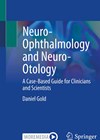
Neuro-Ophthalmology and Neuro-Otology: A Case-Based Guide for Clinicians and Scientists
As Daniel Gold points out in his preface, the idea for this title was borne from the observation that, despite the considerable overlap between the fields of neuro-ophthalmology and vestibular neurology, there is no single text that marries these two...
Some guidelines for treating rhinological patients during the COVID-19 pandemic
This is a very interesting and informative multinational European guide to the treatment of rhinology patients during the current pandemic, describing the safe delivery of a rhinological service to patients. Much of this has become well understood and standard practice...
Remote consultations: bringing ENT in to the 21st century
The ongoing peaks and troughs of the COVID-19 pandemic have imposed unprecedented challenges on day-to-day healthcare provision that we all took as given across the globe prior to spring 2020! The pandemic has, in many ways, made us push boundaries...
Clinical Practice Guideline on Tympanostomy Tube in Children Update (AAO-HNS)
The American Academy of Otolaryngology–Head and Neck Surgery Foundation’s ‘Clinical Practice Guideline: Tympanostomy Tubes in Children (Update)’ has been recently published - an update of the original 2013 guideline. This article forms an executive summary to accompany the full guideline....
ChatGPT Quiz skills need refinement!
On 30 November 2022, ChatGPT was launched, free for all to use online. For those who are not aware, ChatGPT (Chat Generative Pre-trained Transformer) is an artificial intelligence (AI) chatbot which utilises the web to create detailed and natural human-like...