
You searched for "parents"
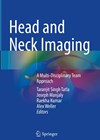
Head and Neck Imaging: A Multi-Disciplinary Team Approach
This textbook, edited and co-authored by ENT surgeons and radiologists, aims to bring to the forefront radiology training for the ENT surgeon, where the editors feel this has been lacking over the years. As the son of a radiologist, I...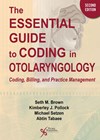
The Essential Guide to Coding in Otolaryngology: Coding, Billing, and Practice Management - Second Edition
Medical coding has been complex, evolving, and less understood by many, although it affects every medical practitioner practice in the United States. This book presents with the essentials of coding and billing for the otolaryngologist, thereby making it efficient and...
Planning for end of life care: is there a role for the speech and language therapist?
This article presents a scoping review of the research literature on the role of speech and language therapists in palliative care settings. The researchers conducted a search using several electronic databases focusing on palliative, terminal and end of life (EOL)...
Listening in noise to predict learning disability
Noise disrupts the neural coding of consonants more than vowels. Listening in noise presents a challenge for everybody, but particularly to children whose language skills are underdeveloped. This team views background noise as a disruption to the necessary neural mechanisms...
How young is too young for tympanoplasty?
This paper presents the largest series of pre-school age children undergoing tympanoplasty compared with older children. The authors have collected much prospective data on 259 children undergoing 284 surgeries so were able to perform multivariate analysis. The age groupings of...
Postauricular advancement flap for partial helix defect repair
Ear defects can be the result of trauma, burns or ablative surgery. The three dimensional structure of the pinna presents a difficult reconstructive challenge as successful ear reconstruction requires both similar tissue cover and a supporting framework. Partial ear reconstruction...
Friendly bacteria in the ear nose and throat to combat the bad…
The author presents a thorough review of bacterial interference and the studies that have been conducted in common ENT conditions. The simple concept is that a strong population of normal flora will interfere with colonisation and subsequent infection by pathogenic...
Postconcussion syndrome: weighing up the options on balance
Balance problems, dizziness, headaches, nausea, vomiting and sensitivity to light and sound, are a few of the symptoms which may be associated with post concussion syndrome (PCS), concussion symptoms which persist longer than 21 days. This article presents a physical...
Pulse synchronous tinnitus
This article reviews the most common neurosurgical causes of pulse synchronous tinnitus. Traditionally, tinnitus has been characterised as subjective vs. objective, or vascular vs. nonvascular. The authors observe that, in some cases, pulsatile tinnitus (PT) is not heard by examiners...
Sing it, say it, sort it: singing for Parkinson’s disease
Parkinson’s disease (PD) occurs in 1% of the population aged over 60. Changes in voice and speech are among the earliest and most prevalent symptoms of PD; reduced vocal intensity, monopitch, monoloudness, breathy and hoarse voice quality, imprecise articulation, vocal...
The case of the women and the words: intensive therapy can help many years post stroke
Aphasia, a language impairment impacting on a person’s ability to speak, understand, read and write, is most commonly caused by a stroke. Speech and language therapists are trained to work with people with aphasia, often aiming for restitution and rehabilitation...


