
You searched for "collaboration"

Directional microphones and speech
This study aimed to research how speech recognition, listening effort and localisation depends on hearing aids’ microphone configuration in people with moderate to severe hearing losses. Eighteen participants with sensorineural, symmetrical, moderate to severe hearing loss were tested. Participants were...A snapshot of UK newborn hearing screening services during the COVID-19 pandemic
During the COVID-19 pandemic, new guidance for newborn hearing screening programmes and management of audiology referrals was released by Public Health England [1,2]. There was also joint guidance from the UK professional bodies [3] and guidance from NHS England regarding...34th Politzer Society Meeting
The latest Politzer Society meeting has just taken place in Rome between the 13 and 16 October 2024, led by its president, Professor Maurizio Barbara. The Politzer Society is an international scientific organisation whose objective is the dissemination of knowledge in the field of otology and neurotology worldwide.ENT & Audiology in this issue...Music
Music is a central part of many people’s lives, and ENT surgeons and audiologists frequently treat patients whose musical experience is affected by pathology. For September/October 2021, we explore a number of areas in which patients need the support of otologists, laryngologists, audiologists, and others.Take part in the FAMOUS study
Could your clinic be one of 40 NHS sites across the UK to participate in the FAMOUS study? Organisers need your help to improve the assessment and management of adult hearing loss.Noise monitoring on a smartphone
“The smartphone has more computing power than was used to put the first man on the moon.” Robert Eikelboom discusses the potential of the smartphone as an effective noise monitoring device. Noise exposure and public health Excessive exposure to noise...Sound advice for staying healthy: promoting holistic health in adults with hearing loss
Hearing loss is linked to chronic conditions like dementia and heart disease. Dr Maidment explores how integrated healthcare can improve outcomes, highlighting the need for a multidisciplinary approach. Emerging evidence suggests that hearing loss is associated with an increased risk...
A dizzying response to the silent killer
In this recent case control report by Kandemir and colleagues, we are asked to consider the association between hypertensive disease and hearing impairment, tinnitus and dizziness. A 200-strong cohort of normotensive and newly-diagnosed hypertensive patients underwent pure tone audiometry, Tinnitus...CEORL-HNS launched new website
The Confederation has recently relaunched its website in a brand-new design and with new, up-to-date content. Click here to visit www.ceorlhns.org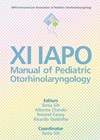
XI IAPO Manual of Pediatric Otorhinolaryngology
The XI IAPO Manual of Pediatric Otorhinolaryngology is a very useful resource for all practitioners working in an ENT-related field that wish to be kept informed of the latest research and development in paediatric ENT. This is published by the...


