
You searched for "infection"

How can we treat a patient with aural fullness?
Aural fullness is a common complaint that we often come across in many of our otology patients. Management of this condition can be quite challenging. Common differentials include eustachian tube dysfunction, patulous eustachian tube dysfunction, otitic barotrauma, superior canal dehiscence...
How common is dysphagia in people with sarcopenia?
Sarcopenia, the progressive loss of muscle mass and function, affects about 10–16% of the global elderly population. The condition has also gained increased attention recently as a contributing factor to dysphagia amongst older individuals. The authors of this paper undertook...
Association of eustachian tube dysfunction in children undergoing adenotonsillectomy for sleep-disordered breathing
The need for this study arises from the fact that after undergoing adenotonsillectomy, some children continue to suffer from symptoms of sleep-disordered breathing (SDB) which overlap with symptoms of eustachian tube dysfunction (ETD), such as cognitive and behavioural impairment, resulting...
Word-finding difficulties in Parkinson’s are as important as speech
Parkinson’s is typically considered to progressively affect speech and voice, with up to 89% of people with the diagnosis experiencing symptoms such as reduced articulatory coordination and a hoarse or breathy voice quality. Despite 80% of people with Parkinson’s experiencing...
Cochlear implantation in SSD
There are currently several trials for cochlear implantation (CI) in single-sided deafness (SSD) being undertaken to answer some of the questions this paper from New York raises. Who is best suited to receive one? What are their outcomes and how...
Which factors affect the postoperative CSF leak following endoscopic skull base surgery?
Endoscopic skull base surgery is being increasingly performed worldwide for skull base tumours. Common indications include pituitary tumours, rathke cleft cysts, chordomas, craniopharyngiomas and olfactory neuroblastomas. The most common and important complication following endoscopic skull base surgery is postoperative CSF...To make a difference
Education and training have a key part to play in the development of leaders of the future; Dorte Hammershøi discusses the educational approaches taken in Denmark and the pros and cons of the methods used. Dorte also explains the BEAR...Time to professionalise medical leadership
For a profession proud of its adherence to an evidence base, medicine has been remarkably slow to acknowledge and to act on the evidence which underpins the value of good leadership to patients and the healthcare system. Mr Robert Francis...Connected hearing healthcare: the realisation of benefit relies on successful clinical implementation
Connected hearing healthcare is the one of best tools for improving access to, as well as the overall quality, of hearing healthcare. Evelyn Davies-Venn and Danielle Glista discuss the benefits and important factors that contribute to successful implementation of this...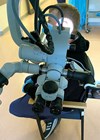
MicroREC Optical System
The MicroREC is a product by Custom Surgical, a German medtech company, and works as an attachment for an operating microscope to enable procedures to be viewed and recorded on a smartphone. It’s advertised as a device used in ENT,...
Safeguarding Physician Wellbeing: Using Checklists for Personal, Professional and Psychological Safety
‘Checklists’ in the operating room make for safer surgery, better handovers and improved patient care. Can we apply the principles we have learned since Atul Gawande and the WHO pioneered this approach to surgery to our own wellbeing as doctors,...


