You searched for "age-related"
Who’s minding the gap?
In this article we focus on minding the gap between education and clinical audiology for children and young people who are deaf (CYPD) and their families, through interprofessional education. This article is provided by Dr Joy Rosenberg who leads the...CEORL-HNS Academy
The CEORL-HNS Academy exists to improve and update knowledge and skills among ORL-HNS residents and young specialists, aiding in their preparation for national and international exams. Exam preparation is sweeter if it can be done in the beautiful surroundings of...Cacophony: the art of communicating deafness by Anita Ford
Here, we discover the profound exploration of deafness through art by Anita Ford. Her Cacophony series delves into the challenges of communication and isolation. Anita Ford was a prolific printmaker and painter. She studied at Loughborough College of Art, obtaining...TWJ Fellowship – Toronto 2015: Endoscopic Ear Surgery
The Thomas Wickham Jones (TWJ) Foundation is a charitable trust with the aim of helping patients with deafness overcome their disability. Striving to achieve this goal they provide educational grants to otolaryngologists and other related audiological professionals working within the...Staying safe during endoscopic ear surgery
There is growing interest in using rigid endoscopes rather than traditional operative microscopes to perform transcanal middle ear surgery. Rigid endoscopy provides a high resolution, wide-angle view of the tympanic cavity through minimally invasive surgical portals. In this article, Elliott...
Virtual and augmented reality in surgery
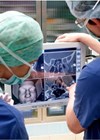
Virtual reality (VR) is a three-dimensional, computer generated environment which can be accessed using a virtual reality headset, allowing individuals to immerse themselves in this virtual world. Augmented reality (AR) systems layer virtual information over a live camera feed into...