You searched for "testing"
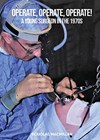
Operate, Operate, Operate! A young surgeon in the 1970s
The book is a memoir of Douglas MacMillan’s experiences as a young surgeon in the 1970s. MacMillan describes his journey from medical school to training and becoming a consultant ENT surgeon. He shares stories about his challenges as a young...Random-pattern skin flaps: part 1 – advancement flaps
In the first of a short series covering random pattern skin flaps and their use in clinical practice (see Part 2 here, Part 3 here and Part 4 here), Christopher Thompson and Miles Bannister describe in some detail their techniques...Endoscopic ear surgery in children
The benefits of endoscopes in otologic surgery, which have become increasingly widely appreciated in recent years, are very well suited to the management of paediatric middle ear disease. Although one might imagine that the smaller ear canal of a child...
Cerebrospinal fluid leaks after vestibular schwannoma surgery
This study analyses 30-day readmission data after vestibular schwannoma surgery using a multicentre longitudinal State of California dataset. The authors studied risk factors, and timing of readmission in 6820 patients over 15 years. Of these, 490 readmissions were reported for...In this issue...Rising to the challenge of COVID-19
Like much of our lives during this period, our planned focus for this issue was suddenly shifted and redefined by the global pandemic. COVID-19 has realigned our personal and professional focus; this issue reflects some of the journey we have...
A new modified double-flap technique for cochlear implant surgery
The authors retrospectively assessed 342 implantees with a minimum of five years’ follow-up who had been implanted using a lazy S-shaped post auricular incision with a modified double-flap technique. From the notes, postoperative wound complications and any other adverse events...My experience of addiction
In this incredibly honest and thought-provoking article, we hear from an anonymous doctor who has struggled with addiction. The nature of addiction is a subject of interest to a broad range of scientific disciplines, from medicine to psychology, psychotherapy and...
What is voice?
Voice is an area of clinical practice in speech and language therapy where there remains much debate, not only around the aetiology and classifications of voice disorders, but around the treatment of them. In general, it is accepted that ‘voice...
Does speech and language therapy provide value for money?
Within the NHS (and outside it), managers, commissioners and consumers will consider value for money as a key component in making a decision about whether to pay for speech and language therapy (or any other service for that matter). Yet...
ChatGPT to select patients for biologic therapies in CRSwNP?
This short communication describes programming the artificial intelligence (AI) algorithm for systematic review of current literature about guidelines on the clinical efficacy and safety of biologics in the treatment of chronic rhinosinusitis with nasal polyps (CRSwNP). The authors first performed...
Feel what you say: a framework to demonstrate the emotional response to aphasia is intertwined with the emotional toll
The authors start this paper by flagging a recent study demonstrating that speech and language therapists in clinical practice rarely have time to focus on emotional issues in relation to aphasia. Yet, people with aphasia describe the close relationship between...