
You searched for "Imaging"
Voices: In conversation with Nick Coleman
Nick Coleman is an author and journalist who has written for several national newspapers and music magazines. Following sudden unilateral deafness in 2007, he wrote The Train in the Night, which describes his experience of hearing loss, rehabilitation and what...
Hearing: An Introduction to Psychological and Physiological Acoustics - Seventh Edition
This text offers a good resource to learn or refresh knowledge relating to psychological and physiological acoustics. While a highly informative source for those learning about audiology such as students and new audiological professionals, as the preface suggests it could...Optimising hearing aid solutions for tinnitus sufferers: essential factors to consider
A tailored approach combining counselling, sensory management and perceptual training can improve the effectiveness of hearing aids in managing tinnitus for individual patients. Hearing aids are useful tinnitus therapy tools, according to tinnitus management guidelines. However, there are few published...Gastric inlet patch – an under-diagnosed cause of globus
A gastric inlet patch (GIP) is an island of heterotopic gastric mucosa found commonly in the proximal oesophagus just below the upper oesophageal sphincter. It is often underdiagnosed due to its location. Its importance and clinical relevance can be underestimated...In conversation with Duncan Boak, founder of Fifth Sense
Anosmia Our sense of smell is something we take for granted – but imagine if it wasn’t there… We see many patients who struggle with anosmia, but perhaps don’t always appreciate how much of an effect it has on their...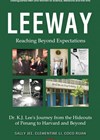
Leeway: Reaching Beyond Expectations
Leeway is a book that takes us through an 80-year journey of one man’s determination, ambition and unbelievable achievements. Prof KJ Lee, as he is known to many today, was born in Malaya in 1940. Ahchu, ‘sweet potato’ in Malaysian,...Thyroid ultrasound elastography: does nodule stiffness predict malignancy?
Approximately 50% of the general population has a thyroid nodule while 5-15% of these are malignant [1]. A major challenge, therefore, is how to detect the malignant nodules for appropriate, timely treatment and avoid unnecessary, costly investigations for the remainder....
Perioperative management of the head and neck cancer patient
The perioperative care of patients with head and neck cancer is complex and requires significant preoperative planning and patient education. The issues include analgesia, antibiotics, stoma and wound care, general and chest physiotherapy, thromboprophylaxis and nutrition. This article provides a...Hope for neural hearing loss
A new review shows significant promise of improved clinical outcomes for patients from the treatments in development for neural hearing loss (NHL), alongside better diagnosis.


