
You searched for "Endoscopy"

Cummings Otolaryngology: Head and Neck Surgery: Seventh Edition - Volumes 1-3
It’s no secret Cummings Otolaryngology: Head and Neck Surgery is amongst the most widely recognised international texts on the subject. This edition does not disappoint, and provides a truly comprehensive evidence-based evaluation of topics in general otolaryngology, facial plastic and...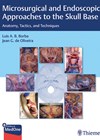
Microsurgical and Endoscopic Approaches to the Skull Base
This is a comprehensive book which covers both microsurgical and endoscopic techniques. The introductory section focuses on setup for microsurgical and endoscopic techniques, with images to support this. A detailed description of instruments is also provided, which would be extremely...
A lateralised middle turbinate post pituitary surgery and incidence of sinusitis
A common belief amongst pituitary surgeons is that lateralising the middle turbinate to access the sphenoid can result in an iatrogenic sinusitis. This paper attempts to find out whether this is in fact true. Thirty-eight patients fitted the inclusion criteria...
Chronic rhinosinusitis and sleep
This is an interesting article from the Chung Shan Medical University in Taiwan. One-hundred-and-thirty-nine patients were enrolled into this five-year study. They all had chronic rhinosinusitis with or without polyposis and underwent sinus surgery. The aim was to investigate a...
Clonidine based vs Remifentanil based hypotensive anaesthesia in FESS
A study investigating the use of clonidine preoperatively in FESS surgery. A double blinded trial of 47 patients in Barcelona randomised into receiving clonidine (20 minutes preoperatively) versus Remifentanil (continuous infusion). Propofol and fentanyl were used for induction and then...
Quality of life after FESS or balloon sinuplasty
This randomised control trial compared the SNOT-22 questionnaires both pre-operatively and three months post-operatively in patients with chronic rhinosinusitis undergoing either FESS or balloon sinuplasty to the maxillary sinus. Forty two patients participated in the study, 21 in each treatment...
Office-based intralesional corticosteroids injections for subglottic stenosis. Is it effective?
Subglottic and proximal tracheal stenosis in adults has three main aetiologies: (a) prolonged endotracheal intubation; (b) idiopathic; (C) rheumatologic related. Endoscopic dilation is the mainstay treatment strategy for subglottic and proximal tracheal stenosis. Its major limitation is restenosis requiring repeated...
Endoscopic transsphenoidal surgery versus dopamine agonist therapy for microprolactinomas
This study addresses the importance of the location of microprolactinomas in determining prognosis after surgery. Long-term dopamine agonist treatment is the current standard of treatment for microprolactinomas. However, patients often seek surgical removal. The authors of this study retrospectively analysed...
Potential benefits of turbinate sparing medial maxillectomy
Whilst endoscopic medial maxillectomy (EMM) has good results as the standard treatment option for tumours arising in the maxillary sinus, postoperative problems of crusting, epiphora and paraesthesia are not uncommon. This paper looks at modified EMM aimed at sparing the...
Olfactory protective effect of omega-3 supplements during healing after endoscopic sellar and parasellar resection
This multicentre study, led by researchers from Stanford, demonstrates another use for omega-3 supplements. The study analysed cohorts equally divided between control arm and omega-3 supplementation. Post endoscopic sellar and parasellar resection, better olfactory function was observed at three and...
Predictors of diabetes insipidus post-hypophysectomy
Transient diabetes insipidus (DI) after pituitary surgery is not uncommon and its diagnosis fairly obvious. Permanent DI is rare and often depends on the neurosurgeon’s experience. This retrospective study describes a large series of patients with majority undergoing endoscopic transsphenoidal...


