You searched for "legal"
The UK National Eye Health and Hearing Study
A pilot study is currently underway in preparation for a UK National Eye Health and Hearing Study (UKNEHS). This will help to ensure an up-to-date and comprehensive picture of sight and hearing loss among over 50s in the UK.
Style. Strength. Storz. Sybill Storz
This is an extraordinary book. When it arrived in my postbox, I certainly didn’t like it. When I opened the packet, it was big, heavy and very glitzy. My first thought was ‘coffee table book’, so I took it through...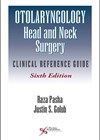
Otolaryngology Head and Neck Surgery: Clinical Reference Guide – Sixth Edition
When I began my ENT training, the revered ‘Pasha’ textbook was one of the first recommendations given to me by senior colleagues who were in the throes of FRCS revision. This revamped edition serves to improve a book which was...
Factors affecting the occurrence of salivary fistula after total laryngectomy
It is generally believed that patients should be fed by nasogastric tube for 7-10 days after undergoing total laryngectomy or laryngopharyngectomy to avoid the occurrence of post-operative salivary fistula. This study challenges this belief and looks into various factors that...
Audiological decision-making in a complex bimodal case of adult congenital atresia
The authors describe a clinical case of a 65-year-old man with left congenital atresia who, as an adult, developed hearing loss in his right (better) ear and subsequently began seeking audiological intervention for hearing difficulties. Their client’s unique case history...Protheses for patients with severe bilateral vestibular loss
In February 2003, I met a patient with severe bilateral vestibular loss due to gentamicin toxicity, and I felt disheartened. Despite the fantastic diagnostic vestibular lab we had at Maastricht University Hospital, what could I truly offer her? She had...
Managing CRS in pregnancy
An International team of experts from both sides of the Atlantic set out to perform a systematic review of the management of chronic rhinosinusitis in pregnancy. Despite a thorough search no scientific evidence was found that could form the basis...The AuD at Salus University: a Capstone Experience
Here, we continue exploring audiology training routes across the world with a focus on distance learning opportunities. This article is provided by Karen Myers who completed the Doctor of Audiology (AuD) Online Bridge programme at Salus University. Completing the International...Drug side-effects on audiological and vestibular testing
Are they a malingerer? Or perhaps they are inattentive? It may be their drugs! Robert DiSogra considers the side-effects of medication on the test subject. The audiogram serves many purposes in clinical practice. For the audiologist, it helps to differentiate...INTEGRATE: Uniting collaborative research in ENT
Exposure to clinical research as a trainee is often sporadic and unstructured, despite it featuring in both the GMC’s Good Medical Practice and the ISCP’s syllabus for all surgical specialities, including otolaryngology [1,2]. The majority of trainees undertake small-scale research...