
You searched for "training"

Retained surgical cottonoids in the nose
his is an interesting group of case reports essentially documenting the presence and characteristics of retained surgical packing (non-resorbable) post sinus surgery. Paranasal gossypiboma refers to surgical foreign objects such as sponge or patties that are left in the nose;...New podcast : Follow your Nose
The Irish Rhinologic Society has recently launched an introductory patient education podcast series. The initial series will be four episodes, which will also include a dedicated episode to asthma/allergic rhinitis and nasal surgery.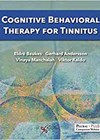
Cognitive Behavioral Therapy for Tinnitus
I was sceptical when I read that Cognitive Behavioral Therapy for Tinnitus was aimed at both clinicians and people with tinnitus. All too often, books intended for such a wide readership end up being too academic to appeal to patients...Shooting for Gold: ENT surgery and the Commonwealth Games
What are the secrets to success in your career, sports and life in general? Sharp-shooter Parag Patel hits the bullseye again. I write this article following a wave of summer sporting brilliance, from the record Great Britain 67 medal haul...
Neuro-Ophthalmology and Neuro-Otology: A Case-Based Guide for Clinicians and Scientists
As Daniel Gold points out in his preface, the idea for this title was borne from the observation that, despite the considerable overlap between the fields of neuro-ophthalmology and vestibular neurology, there is no single text that marries these two...The use of THRIVE in laryngology and phonosurgery
The team in Lewisham has been using THRIVE for our phonosurgical cases for about a year. Here, we discuss the pros, cons and potential pitfalls of setting up and using THRIVE as ventilation during anaesthesia rather than using an ML...In conversation with Professor Paul J Donald
Prof Paul J Donald has recently stepped down as Chairman of the ORL-HN Department at UC Davis in Sacramento and is winding down to retirement. In this interview with Prof Pat Bradley, Prof Donald explains some of the highlights of...Screening for hearing loss with mHealth solutions
With the number of people suffering from hearing loss growing all the time, the need for early detection and intervention is imperative. De Wet Swanepoel discusses two examples of mHealth possibilities for hearing screening which, as a low cost solution,...
On-call ENT apps
ENT apps for trainees are few and far between. Here are a couple of them which could be useful for the on-call. ENTSHO.com Born out of the website with the same name, this app is a must-have if you work...In conversation with Duncan Boak, founder of Fifth Sense
Anosmia Our sense of smell is something we take for granted – but imagine if it wasn’t there… We see many patients who struggle with anosmia, but perhaps don’t always appreciate how much of an effect it has on their...


