
You searched for "Aetiology"
Submissions for the 6th Annual Hearing Technology Innovator Awards™
Hearing Health & Technology Matters (HHTM) is now accepting submissions for the sixth annual Hearing Technology Innovator Awards™, an annual programme honouring technological innovation and achievement in the hearing industry.This year’s awards will recognise excellence in the following eight categories:...Looking forward: incoming RSM presidents preview the year ahead
This November, Professor Simon Lloyd takes over from Patrick Axon as Otology Section President of the Royal Society of Medicine, and Professor Vin Paleri takes over from Michelle Wyatt as President of the Laryngology and Rhinology Section. Both incoming presidents share highlights from their programmes for the forthcoming year.Audiology Papers of the Year 2015-16
In this short review we have asked Melanie, Carolina, Josephine and Cherilee to consider the best article they have read in the last 12 months and provide us with a short review. All contributors have managed to succinctly highlight the...Evidence-based hospital management of epistaxis
Epistaxis is the most common presentation to acute ENT services in the UK. However, there are currently no nationally accepted guidelines for its management. The British Rhinological Society, ENT UK and INTEGRATE (The National ENT Trainee Research Network) are working...Task shifting in public hospital rhinology new patient assessment
Nurse-led rhinology clinics and CBCT imaging streamline assessment, improve equity and expand capacity in a resource-constrained public hospital setting. In the ENT department at Waikato Hospital, New Zealand, we have faced problems that are no doubt well known to many...Temporal bone trauma
Introduction Temporal bone injuries represent one of the more complex management problems presenting to the otolaryngologist. This is largely due to difficulties in assessment and the frequent delays in referral, often as a result of other injuries demanding more immediate...Congenital cytomegalovirus causing deafness in children: an update
Congenital CMV is the leading non-genetic cause of sensorineural hearing loss in children. Keith Trimble draws our attention to this and gives a comprehensive guide on diagnosis and treatment. Congenital cytomegalovirus (cCMV) infection is common, affecting 1% of all newborns,...Thyroid cancer – the last decade
Professor Ashok Shaha describes the evolution in the treatment of thyroid cancer that he has witnessed over the last decade and the invaluable progress made by himself and others, from their contributions to staging systems and guidelines. Nuances and paradigm...5th Annual Inner Ear Disorders Therapeutics Summit
Coined by industry as the only meeting of its kind and uniquely positioned to share fresh ideas and assess viable approaches to your most pressing preclinical, translational, and clinical bottlenecks, the 5th Inner Ear Disorders Summit returns as a forum to benchmark learnings from past failures, reignite momentum and develop investment into the audiology therapeutic landscape.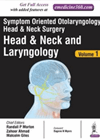
Symptom Oriented Otolaryngology: Head & Neck Surgery – Three Volume Set
Symptom Oriented Otolaryngology is a three-volume set covering an extensive range of symptoms in otorhinolaryngology, head and neck surgery. The editorial team of Randal Payne Morton, Zahoor Ahmad and Malcolm Giles from New Zealand, have been supported by an illustrious...VACANCY: Audiology Partner – Pontypridd
Take on this existing successful business and make it grow, look after your private customers, serve your community, create an asset for your family’s future and enjoy the profits of all your hard work.


