
You searched for "simulation"
Farewell to Prof Kim Ah-See
Kim Ah-See has been a stalwart member of the ENT & Audiology News team for many years. Since joining as a journal reviewer in 1997 and then taking on the role of How I Do It section editor a decade...News from the International Vestibular Society
The executive committee of the International Vestibular Society has announced two new awards in vestibular science: one for basic and the second for clinical research. The society wishes to promote and encourage young researchers below 38, and allow the award...
Occupational hazards affecting otolaryngologists
This is a questionnaire survey which received responses from 323 clinicians practising otolaryngology. The grades ranged from consultants to junior doctors. It was noted that nearly half of these respondents suffered from some form of musculoskeletal pain and it highlights...
British Skull Base Society Clinical Consensus Document on Management of Head and Neck Paragangliomas (HNPGLs)
All forms of HNPGLs should be managed by a multidisciplinary team (MDT) of core members from skull base otolaryngology, head and neck surgery, clinical genetics, oncology, endocrinology, vascular surgery, radiology and pathology. Extended members include neurosurgery, endocrine surgery, nuclear medicine,...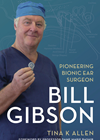
Bill Gibson: Pioneering Bionic Ear Surgeon
Professor Bill Gibson is one of the great pioneers of inner ear surgery and the recent publication of his biography is a reflection of his remarkable life and career. Bill Gibson: Pioneering Bionic Ear Surgeon will be enjoyed by everyone...A funny thing happened whilst your boss was away at a conference
What is the difference between God and Professor Sir Donald Harrison? God is everywhere – Sir Donald is everywhere except at the Royal National Throat Nose and Ear Hospital! This was a common joke about Sir Donald, who was much...
Postoperative ultrasound surveillance in patients undergoing hemithyroidectomy
Hemithyroidectomy, as opposed to total thyroidectomy with radioiodine remnant ablation, is now increasingly undertaken for low-risk, differentiated thyroid cancer. If on histology, this proves ‘high risk’, completion thyroidectomy is done fairly soon. In this retrospective study, a total of 105...New Usher Syndrome helpline
A new helpline has been launched to provide one-stop support for people with Usher syndrome (the most common genetic cause of deafblindness). The helpline is run by a charity partnership of Deafblind UK and Deafblind Scotland, and will be a dedicated support service for people living with Usher syndrome and for families, carers and professionals supporting them.Mentally and physically safe workplaces: the challenge of doctors’ well-being
Our ENT consultant colleague Eric Levi bravely tackles the very real elephant in the room of that stigma which is not really discussed until it is often too late. It takes courage to tackle a difficult topic like doctors’ mental...
Tumours of the Nose, Sinuses and Nasopharynx
Tumours of the nose, sinuses and nasopharyx is a comprehensive, clear and beautifully illustrated text describing the wide range of benign and malignant tumours of the upper jaw and their management. In such a specialist field, the editors have unparalleled...
Clinical Management of Children with Cochlear Implants - Second Edition
This substantial volume is nearly 900 pages long but definitely worth the shelf space. That said, it hasn’t actually made it to a shelf since its arrival at our department as everyone who spotted it has wanted to borrow it!...


