You searched for "Hearing loss"
Why and how to assess digital literacy of older adults with hearing loss
Assessing digital literacy in older adults with hearing loss is vital for equitable care. The new DL-2Q tool quickly measures such skills, ensuring tailored support and better outcomes. Digital literacy and its importance When an older patient walks into your...Cochlear implantation for single-sided deafness and asymmetric hearing loss
Continuing our sub-theme of cochlear implantation candidacy, Richard Irving and Raghu Kumar review the principles and benefits of cochlear implantation in individuals who have an asymmetric hearing loss. It is well known that cochlear implantation improves auditory capacity, and in...Mapping the financial and disease burden of hearing loss and associated interventions
The prevalence and burden of ear and hearing disorders is huge and, historically, has been underappreciated. Globally, unaddressed hearing loss poses a growing public health challenge, requiring urgent attention from policymakers, health professionals and civil society. The recently published World...
Posterior TM perforations carry greater hearing loss: practical pointers for clinic
This single-centre prospective study of 100 adults with central pars tensa perforations examined how perforation size and quadrant relate to hearing loss. Using video-otoscopy to estimate perforation area and pure tone audiometry for thresholds, the authors found hearing loss in...The connection between hearing loss and cognitive decline: current perspectives
Editorial clarification This article reviews research exploring associations between hearing impairment, cognitive decline and dementia. While evidence shows a dose-dependent relationship, it is important to note that association does not prove causation, and current research does not definitively show if...
How AI is expanding accessibility for people with hearing loss in speech-to-text apps
In hospitals and clinical environments where masks are required, deaf and hard-of-hearing individuals continue to experience additional barriers due to the absence of visual cues. Similarly, large in-person meetings, virtual sessions, classrooms and lectures can be difficult to navigate when...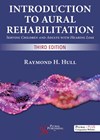
Introduction to Aural Rehabilitation Serving Children and Adults with Hearing Loss - Third Edition
As the name indicates, this book deals with the bread and butter of audiologists or at least what should be our bread and butter. We work with changing people in changing environments, therefore, along with an acute understanding of technology,...
Role of cochlear implants in the management of incapacitating tinnitus in patients with unilateral hearing loss
This is an interesting paper on patients with unilateral hearing loss and incapacitating tinnitus. The present study was conducted on 23 patients who had a cochlear implant for unilateral hearing loss including patients with single sided deafness (SSD). Most of...
Does a labyrinthine fistula in cholesteatoma surgery lead to hearing loss?
Thirty-five patients with labyrinthine fistula related to cholesteatoma were studied retrospectively. All patients underwent CT scans and preoperative hearing tests 1-2 weeks prior to surgery (averaged at 0.5, 1, 2, 3, 4, 8 kHz). All 35 patients underwent mastoid surgery,...
Does stress and anxiety worsen idiopathic sudden hearing loss outcomes?
There have been suggestions that the natural course of the idiopathic sudden sensorineural hearing loss (ISSNHL) is not affected by intensive therapy. There is speculation as to whether unknown factors affect the treatment prognosis. This is a retrospective study of...
Should we be doing earlier MRIs in sudden sensorineural hearing loss?
There is recognised variation between ENT departments in exact imaging protocols for the workup of idiopathic sudden sensorineural hearing loss (ISSNHL) but a routine MRI to exclude retrocochlear pathology is standard, usually following immediate treatment with oral +/- intratympanic steroids....