
You searched for "cancers"

Getting DAP’d at concerts, museums and more
Recently, I had the opportunity to speak with Dr Nir Fink and Yami Thor about their products at Bettear and their new deep audio processing (DAP) AI-based technology. The purpose of Bettear is to improve inclusivity and accessibility for those...Ear wax: the good, the bad, and the ugly
With ear wax removal being a core part of ENT and audiology services, Seth Schwartz gives us his dos and don’ts. We have all seen cartoons where a character pulls enough wax out of their ears to make a candle....A woman in a man’s world
Being one of the few women professors of surgery in the world for most of my career inevitably led to some amusing situations. When I was first invited to the Middle East in the 1990s, I accepted primarily to see...Hearing loss toolkit updated
The British Hearing Instrument Manufacturers Association (BIHIMA) and the Royal College of General Practitioners (RCGP) have updated the hearing loss toolkit they developed in 2020/21.Endolymphatic sac surgery: controversial procedure for the treatment of Ménière’s disease
Landmark Paper: Thomsen J, Bretlau P, Tos M, Johnsen NJ. Ménière’s disease: endolymphatic sac decompression compared with sham (placebo) decompression. Ann N Y Acad Sci 1981;374:820-30. Of all of the chapters in the Landmark Papers book, the chapter that discussed...Is one glass of wine on call safe?
It’s a standard question for those about to sit a Specialist Training (ST) interview; you are on call and you call a senior colleague in to perform an operation. You smell alcohol on the breath of the surgeon, so what...Conspiring together: tinnitus and hearing loss
In this special feature, Nic Wray of the British Tinnitus Association and Zheng Yen Ng of The Ear Foundation present the results of their report into managing tinnitus for people with hearing loss. In September 2015, the British Tinnitus Association...Development and review of a blended service in response to COVID-19
The COVID-19 pandemic has required healthcare services globally to show both resilience and ingenuity in redesigning services to meet the ever-changing needs of our patients. We hear about the redevelopment of clinical pathways within an hearing implant service, and the...Working with people with hearing loss and dementia
A member of the SENSE-Cog team in the UK, Dr Littlejohn provides an overview of multidisciplinary recommendations for diagnosis, management and care of older adults with hearing loss, vision loss and dementia. She underscores how consideration of hearing status when...In conversation with Prof Metin Önerci
Prof Valerie Lund caught up with friend and colleague, Prof Dr Metin Önerci, to discuss his various positions in rhinology, the FOAM programme with which he is involved, and rhinology in Turkey and the Balkan and the Central Asian region....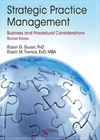
Strategic Practice Management – 2nd Edition
I was very pleased to take on the task of reviewing this book as I support Starkey’s Business Development Partnership Programme set up to support the UK and Irish Independent sector and to encourage audiologists to run their own businesses....


