
You searched for "retraction"
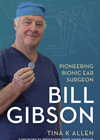
Bill Gibson: Pioneering Bionic Ear Surgeon
Professor Bill Gibson is one of the great pioneers of inner ear surgery and the recent publication of his biography is a reflection of his remarkable life and career. Bill Gibson: Pioneering Bionic Ear Surgeon will be enjoyed by everyone...Audiology support for Philippine call centre employees
Call centre employees face unique challenges that impact their hearing health. BPO companies are implementing initiatives in the Philippines to safeguard their auditory wellbeing. The Business Process Outsourcing (BPO) industry in the Philippines is a dynamic and rapidly growing sector....
What to do if adenotonsillectomy does not cure sleep apnoea in children?
This article reviews the management of children with persistent obstructive sleep apnoea (OSA) following adenotonsillectomy (AT). Risk factors for patients to have persistent disease include obesity, being Afro-Caribbean and existing co-morbidities such as craniofacial and neuromuscular disorders. Initial assessment of...
Balloon eustachian tuboplasty and inferior turbinectomy
This Taiwanese prospective case-control study looked at concurrent inferior turbinectomy (via submucosal turbinectomy) and balloon eustachian tuboplasty on symptoms related to eustachian tube dysfunction. A total of 50 patients who underwent inferior turbinectomy with balloon eustachian tuboplasty were recruited prospectively...Database WG2. The Tinnitus Patient Database in the TINNET COST Action BM1306
Berthold Langguth describes an innovative project that is creating the world’s largest multi-national patient database containing standardised information on tinnitus and medical history, otological examination and psycho-acoustic measures of tinnitus. A challenge for tinnitus treatment and tinnitus research is the...Rapid genetic testing to avoid hearing loss in neonates
Thousands of newborn babies could avoid a lifetime of hearing loss thanks to a new rapid genetic test. In this article, we learn how. We have demonstrated for the first time that a rapid genetic test from a cheek swab...
Age is not an issue in sinus surgery
We have an increasingly aged population, and hence older and older patients are presenting with sinonasal issues and the potential need for endoscopic sinus surgery (ESS). The authors sought to identify if older patients (age >70) have more complications post...Doctors’ health and wellbeing: depression in surgeons
Dr Clare Gerada and Richard Jones work for the Practitioner Health Programme (PHP), a specialist service for doctors and dentists in the London area with mental health / addiction problems (www.php.nhs.uk). Here they discuss some of their preliminary findings (specific...
Endoscopic Sinonasal Dissection Guide: Second Edition
Unlike many endoscopic dissection books, this dissection manual focuses exclusively on surgery without reference to the physiology or medical treatment of sinus disease. For trainee surgeons that are keen to improve on surgical skills alone, this definitely fits the brief....The role of the multidisciplinary team in laryngology and airway – the Charing Cross experience
As the National Centre for Airway Reconstruction, the Charing Cross laryngology MDT provides expert care to patients with airway problems as well as voice and swallowing disorders. In this article, the team explain their raison d’etre and why the MDT...Developments in diagnostic approaches for acutely dizzy patients
The acutely dizzy patient can be a diagnostic and management dilemma for emergency departments and general practitioners, with many patients consequently having delayed access to specialised assessment and treatment. David Jay tells us about HINTS, a bedside test that can...


