You searched for "future"
Experience on the front line
21st January 2021 Back to basics Yesterday I went right back to where my medical career began. I grew up in Germany, bilingual. A prerequisite to studying medicine in Germany is that applicants have to spend two months working as...Functional Endoscopic Sinus Surgery (FESS) - Part 2
In the first of this two-part series, Martyn Barnes and colleagues discussed indications for functional endoscopic sinus surgery (FESS), the surgical objectives and techniques, patient expectations and the risks of surgery [1]. In this second and final part, the authors...Endolymphatic sac surgery: controversial procedure for the treatment of Ménière’s disease
Landmark Paper: Thomsen J, Bretlau P, Tos M, Johnsen NJ. Ménière’s disease: endolymphatic sac decompression compared with sham (placebo) decompression. Ann N Y Acad Sci 1981;374:820-30. Of all of the chapters in the Landmark Papers book, the chapter that discussed...Virtual Voices sing out
The search is on for musicians with a hearing implant to be part of an online collaboration. The Virtual Voices and Band project is inviting hearing implant users of all types, countries, abilities and brands to unite by recording a vocal or instrumental performance of Beethoven’s Ode to Joy.In conversation: Cesare Piazza and Giuseppe Spriano
Declan Costello catches up with the presidents of two important meetings taking place in Italy in June 2023 to discuss the highlights.In conversation with Frederik Dikkers
Declan Costello, editor of ENT & Audiology News, has recently enjoyed a couple of conversations with Professor Emeritus Frederik Dikkers that you can now watch on YouTube.EUHA seeks start-ups
For the first time, the Europäische Union der Hörakustiker (EUHA) is offering you the opportunity to share your ideas in the centre of the industry exhibition in Hanover at the 68th International Congress of Hearing Aid Acousticians, 16–18 October.Hearing loss and dementia – a webinar with Professor Kevin Munro
Transforming the narrative around hearing loss and dementia A webinar with Professor Kevin Munro The British and Irish Hearing Instrument Manufacturers Association (BIHIMA) and Professor Kevin Munro, a leading expert in audiology, will host a webinar to discuss the critical...Hearing pioneer Gerard O'Donoghue retires
The Nottingham Auditory Implant Programme (NAIP) has announced the retirement of Professor Gerard O’Donoghue, Consultant Neuro-Otologist at Queen’s Medical Centre, Nottingham. A pioneer in the field of hearing restoration, Gerry’s career has been defined by his groundbreaking work in cochlear implantation.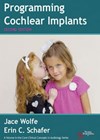
Programming Cochlear Implants - Second Edition
Wolfe and Schafer open their second edition with up-to-date images of brand-specific devices and show various configurations and customisations available to the recipient. For the audiologist, they introduce highly relevant topics such as polar plots for microphones, array types and...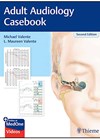
Adult Audiology Casebook (2021)
Diagnostic audiology is one of my passions so, naturally, the title of this book was an attractive proposition for the clinician in me – and I wasn’t disappointed! It is seldom that you will learn so much in both the...