
You searched for "communications"
In conversation with Sam Lear, BAA President: leading audiology forward
Dr Samantha Lear is the current British Academy of Audiology President, and Senior Audiology Policy Advisor at the National Deaf Children’s Society. With reviews ongoing in paediatric audiology in England and Scotland, Sam is ideally placed to lead the profession....In conversation with Dr Naufal Kassim
Jane and I first met you six years ago, when we were questioning the apparent high incidence of childhood deafness in Tanzania, and it is a real pleasure doing this interview with you. Your contribution to ENT and general health...Remembering James F Jerger
Dr Jerger contributed remarkably to both the scientific basis and clinical practice of our profession. He passed away on July 24 at the age of 96 years. James F Jerger, PhD, was the Founder of the American Academy of Audiology and served as its first president. He was a gifted and prolific writer, a renowned scientist, and a beloved teacher and colleague.A brief history of the acoustic ear trumpet and some collection favourites
If you think you know a thing or two about ear trumpets, I’d bet Michael Briggs knows more! In this fascinating article, he tells the history of the ear trumpet, as well as sharing some wonderful pictures from his Guiness...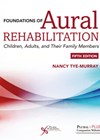
Foundations of Aural Rehabilitation: Children, Adults, and Their Family Members – Fifth Edition
Nancy Tye-Murray leaves no stone unturned in her fifth edition of Foundations of Aural Rehabilitation: Children, Adults and Their Family Members. The exhaustive but not exhausting content offers a three-dimensional insight into the process of (re)habilitation in the clinical setting...What’s happened since the European position paper on nose and sinus tumours?
The management of malignant sinonasal tumours has gone through radical changes in recent years. Prof Valerie Lund gives us an update based on her upcoming talk at IFOS. In 2010 when we published the European position paper on ‘endoscopic management...


