You searched for "ears"
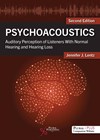
Psychoacoustics: Auditory Perception of Listeners with Normal Hearing and Hearing Loss - Second Edition
Dr Lentz’s Psychoacoustics: Auditory Perception of Listeners with Normal Hearing and Hearing Loss, Second Edition is a 287-page introduction to the eponymous field that fills some (like myself) with great interest, though I have recognised the soporific effect of even...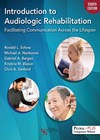
Introduction to Audiologic Rehabilitation: Facilitating Communication Across the Lifespan – Eighth Edition
The eighth edition of Introduction to Audiologic Rehabilitation is an invaluable and highly informative resource for anyone involved in the field of audiology and speech-language pathology. Designed to accommodate undergraduates, graduates and experienced clinicians alike, this textbook skilfully bridges the...
Tinnitus and leisure noise
Tinnitus attracts large interest among researchers all over the world due to its negative psychological side-effects. Researchers from the National Acoustic Laboratory (NAL) tested life-time noise exposure and its influence on the tinnitus experience in 1435 young Australians from various...
Inter-aural hearing preservation in cochlear implantation
Hearing preservation during cochlear implantation is becoming increasingly important, although results can be unpredictable. NICE are in the process of updating their guidance in the UK and it is possible that those with better hearing than the current candidates will...
Stapedotomy in osteogenesis imperfecta
Osteogenesis imperfecta (OI) is a rare connective tissue disease caused by a defect in collagen structure. Hearing loss is a characteristic feature of OI. It typically presents with conductive hearing loss initially, followed by a superimposed sensorineural component later in...Cambodian Otology Fellowship report
Further to a Humanitarian News article published in the November/December 2014 issue of ENT and Audiology News (see article here), this is a report of Charlie Huins’ six-month experience as the first ENT Fellow at the Children’s Surgical Centre (CSC),...First ever WHO World Report on Hearing launched on 3 March
On 3 March, thousands of people in over 100 countries joined together to celebrate World Hearing Day and to work together towards patient-centred ear and hearing care for all. This day also marked the historic launch of the first ever...
Steroid use in acute acoustic trauma
Acute acoustic trauma (AAT) injuries include noise-induced damage to inner and middle ear presenting as hearing loss, tinnitus and vertigo. Classic presentation is sensorineural hearing loss with an intact tympanic membrane. The authors carried out a case-control study in military...Body self-image – the ENT perspective
Body dysmorphic disorder is a serious psychiatric condition that we all need to be aware of when contemplating aesthetic surgery. It can present in children as well as adults. Prof Vieira and Dr de Carvalho discuss the tell-tale signs and...
Objective testing for Eustachian tube dysfunction
Eustachian tube dysfunction (ETD) is typically diagnosed based on subjective symptoms and examination leading to wide variation in its diagnosis and management. The search for an objective test has looked at ways of measuring the passage of air through the...
Preoperative unaided maximum monosyllabic word recognition score as a predictor of CI outcomes
This retrospective study supports early intervention and hearing rehabilitation with hearing amplification for adults. The authors included 103 patients (128 ears), who had undergone cochlear implantation over a seven-year period, in this study. All patients had been assessed for their...