
You searched for "intervention"
KUDUwave™ Boothless Audiometer
The KUDUwaveTM was designed to replace the need for a sound booth and enable truly portable audiometry in almost any environment. ENT & Audiology News’ own Gareth Smith, Priya Carling and Alex Griffiths Brown met in London to put the...The new (digital) face of BIOHIT HealthCare
BIOHIT HealthCare is pleased to announce the launch of its new website, which is designed to make it easier than ever for healthcare professionals to find the information they need.Nuclear heads – and necks
Imaging of the extra-cranial head and neck is challenging due to the anatomic complexity of the region. CT, MRI and ultrasonography (US) are amongst the most frequently utilised radiological modalities in head and neck imaging but do not always provide...Recognition for Sunil
Congratulations to Sunil Narayan Dutt, one of the global ambassadors on ENT & Audiology News, whose work has been championed by the Government of Karnataka in South West India. The senior consultant and clinical director in ENT at Apollo Hospitals,...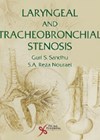
Laryngeal and Tracheobronchial Stenosis
Management of patients with laryngeal and tracheobronchial stenosis is extremely challenging and complex and truly requires a multidisciplinary approach in its management. This book, written by experts in their respective fields, provides a detailed and up-to-date overview of the subject...
Current Diagnosis & Treatment: Otolaryngology Head and Neck Surgery – Fourth Edition
I was quite intrigued to receive this book, as the third edition was a book I had read cover to cover whilst a trainee, and was one of my core books. Initially, having a quick glance through, I could immediately...
Healthcare Disparities in Otolaryngology
The topic of this book seems timely given the increasing focus in recent years on equality and prevention of discrimination. But my initial reaction was, do we need a 300-page textbook on this topic? Is there so much to say?...
McIsaac scores in tonsillitis
Acute tonsillitis is usually caused by a viral infection, however often antibiotics are prescribed without a confirmed diagnosis of a bacterial infection. The Modified Centor (McIsaac) criteria, which include fever (>38°c), tonsillar exudate, no cough, anterior cervical lymphadenitis and age,...
Predictors of complications in patients undergoing oral cavity cancer surgery
Surgical management of oral cavity cancers is complex, frequently involving extensive resections and complicated reconstructions. Quantification of risk in an individual patient may allow surgeons to more effectively identify patients at higher risk of complications and develop strategies for prevention,...
Nasal deformity following CPAP injury
Nasal continuous positive airway pressure (nCPAP) is commonly used as a non-invasive alternative to endotracheal intubation and tracheotomy to provide respiratory support to very low birth weight (VLBW) (<1500 g) neonates. Nasal injury is a well recognised complication and figures...
Preventing major postoperative haemorrhage following TORS
Transoral robotic surgery (TORS) has become an increasingly utilised treatment modality in the management of oropharyngeal squamous cell carcinoma (OPSCC). Postoperative haemorrhage, although uncommon, is a significant complication. To ameliorate this risk, transcervical ligation of branches of the external carotid...


