You searched for "audiologists"
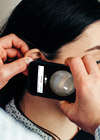
Portable otoscopy image capture devices – a comparative review
The use of photo documentation in ENT clinics is becoming more common as technological advances have made the hardware required more accessible. There is significant variation in the price of products. Daniel Moualed, Olivia Whiteside and Chris Aldren review the...Cochlear implant referral: how can we do better?
Considerable progress has been made over the last few years in improving access to cochlear implantation (CI) in the UK for children and adults with severe to profound deafness. But we are still not treating children early enough, and we...Preventing avoidable deafness and death from ear disease in Ethiopia
In the July/August edition of the magazine, we featured an article on humanitarian work in Ethiopia, focusing on head and neck surgery. Continuing this theme, Misha Verkerk tells us about an international collaboration providing otology care and training in that...Breaking barriers in Uganda: the story of Elaine Mukaaya
More than 9% of sub-Saharan Africa’s one billion people live with disabling hearing loss, with children having among the highest rates of childhood hearing loss in the world [1]. Sadly, in concordance with the inverse care law – proposed by...Innovative approaches to treating deafness
Shahar Taiber and Karen Avraham give us a summary of gene therapies for hearing loss, with an overview of limitations and what the future holds. Hearing loss is the most common sensory disorder. The last two decades have seen a...The birth of the TWJ Foundation
For nearly 50 years, the TWJ Foundation has been promoting the advancement of otology and audiology through education and research. David Wright looks back at its first half century.World Hearing Day – country by country
Hundreds of events took place to mark World Hearing Day on 3 March – the date selected because 3.3 resembles the shape of our two ears.Hearing loss toolkit updated
The British Hearing Instrument Manufacturers Association (BIHIMA) and the Royal College of General Practitioners (RCGP) have updated the hearing loss toolkit they developed in 2020/21.
Medicine and Seamus Heaney
Seamus Heaney grew up in the 1940s. Infectious diseases – diphtheria, poliomyelitis, mumps, measles and rubella – were rife. Stepping Stones recalled talk among older neighbours of ‘a-waiting on’ when they were close to death. Aunts and uncles succumbed to...
Globe Trotting and 62 years of ENT
Vasant Oswal was, for many years, ‘Mister ENT’ in the Northeast of England. Appointed as a consultant to the old North Riding Infirmary in 1970, he led what was a small and little-known department through a period of tumultuous change...