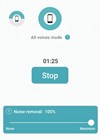
Ever find yourself in a noisy restaurant, barely following conversation yet nodding in clueless agreement? Considering how loud social settings can be, this is likely a familiar scenario. As gatherings become a regular part of our lives again, so do...
It is recognised that hearing loss and ear disease are far more common in less affluent parts of the world, and that those countries are often least able to provide treatment; so how can we prioritise care for these patients?...
As these things sometimes happen, our first conversations about Social Enterprise happened pretty much by chance and in our case were a by-product of discussions about a new department having outgrown the current one. The National Health Service (NHS) Audiology...
Benchmarking is a process of comparison between the performance characteristics of separate, often competing, organisations intended to enable each participant to improve its own performance [1]. Often, in healthcare, benchmarking is carried out by central government departments or regional agencies...
The global COVID-19 pandemic has had a significant impact on each of us, both personally and professionally. We have had to adapt the way we live and work and find our ‘new normal’. Francesca Lynch, Senior Paediatric Audiologist at Guy’s...
From a sunny Southend, UK, Gareth Smith takes 10 minutes to dial into the Sunshine State, USA, and catch up with Tish Gaffney for a lightning-speed chat on the movements and motivations of the 35th president of the American Academy...
Cochlear implants have quickly become a widely used aid for hearing-impaired people. As these implants include metal elements, the choice of an appropriate imaging modality for patients carrying such devices should receive special attention. This is important due to image...
1 January 2018
| Valerie J Lund (Prof), Declan Costello
|
ENTA - ENT
Professor Lund is ‘Master’ of BACO International 2018. She was made an Honorary Fellow of the American College of Surgeons in October, the first woman in ENT to receive this. ENT & Audiology News Editor, Declan Costello, caught up with...
Jackie Clark, PhD, is a clinical audiologist, professor of audiology, and researcher. She is also the new President of the American Academy of Audiology (AAA). While on an annual working trip to South Africa, Jackie answered a few questions about...
Neuromod Devices, the medical technology company that developed tinnitus treatment device, Lenire, has partnered with an additional 24 new US clinics to address the significant demand for the FDA Approved tinnitus treatment device.
For the fifth cover in the Art meets Science series, we celebrate not only the fusion of audiology and art, but also friendship, nature and the kind of collaboration that reaches far beyond the clinic walls. My colleague and dear...
Dr Christiansen brings over 30 years of experience as a practising otolaryngologist both in private practice and in academic medicine as Associate Professor of Clinical Otolaryngology at the University of Missouri School of Medicine. Dr Christiansen started his career in...