You searched for "ventilation"
Increased intensity of treatment: intensity does not improve outcomes
There is a paucity of reports regarding the intensity and appropriate duration of treatment required to improve the language abilities of children with language impairment. This study used direct measures such as the time spent on language, the frequency, number...Recent advances in the diagnosis of silent reflux
The vexed topic of reflux always generates much discussion, particularly when it comes to testing. We hear about a non-invasive assay that is gaining in popularity. Voice disorders impact around four percent of the UK population and can significantly hamper...From the editor May/Jun 2026
Declan Costello, MA, MBBS, FRCS(ORL-HNS),Consultant Ear, Nose and Throat Surgeon, Wexham Park Hospital, Slough, Berkshire, UK. TW / X: @Voicedoctor_uk In our last edition, we featured the amazing work of Prof Shahed Quraishi and his ENT Masterclass® – the organisation...The ‘bus stop’ incision for bone-anchored hearing aid placement: a step-by-step approach to soft tissue preparation
There have been many descriptions of soft tissue preparation in the era when subcutaneous tissue was routinely removed with the Nijmegen technique [1] or with the dermatome [2]. More descriptions continue to evolve with the advent of tissue preservation techniques,...
Surgery for drooling
This paper looks at the surgical options for sialorrhoea once the first two options of behavioural and physiotherapy interventions and pharmacotherapy have been exhausted. The social impact of sialorrhoea on patients and their families is significant and often lifelong therefore...
Eustachian tube dilatation can be done as an office procedure
Symptoms of eustachian tube dysfunction can often prove stressful and the treatment can be quite challenging in terms of sustained improvement. In this study, 31 patients underwent eustachian tube dilatation under local anaesthesia. The procedure is based on the concept...Hearing matters in New Year's Honours
Emeritus Professor David Kemp from the UCL Ear Institute, widely known for his discovery of otoacoustic emissions, has been made a CBE for services to auditory sciences and public health. Robert Nolan, chair of Deafblind UK, was awarded OBE for services to people living with deafblindness.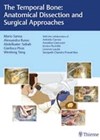
The Temporal Bone: Anatomical Dissection and Surgical Approaches
The Temporal Bone: Anatomical Dissection and Surgical Approaches does exactly what it says on the tin. It is an excellent combination of anatomical atlas and dissection manual for temporal bone surgical procedures, designed to be kept open at the benchside...BAA to host World Congress of Audiology in 2028
The British Academy of Audiology is delighted to have won its bid to host the International Society of Audiology’s World Congress in 2028 (WCA2028). The 38th Congress will be hosted in Edinburgh, 23-26 April 2028.