
You searched for "hearing"
Tinnitus UK calls for policy change
Tinnitus Week 2026 in February was heralded a success after a powerful campaign for policy change and a first 'safe listening’ concert. A series of high-profile activities led by Tinnitus UK, brought together policymakers, musicians, health professionals and audiences to address the growing impact of tinnitus linked to live music and sound exposure.
How do you solve a problem like Dysphagia?
When a patient is referred to a speech and language therapist for the management of swallowing difficulties, multiple options are available to address these issues. The choice is based on a detailed assessment of the patient’s swallowing physiology and function....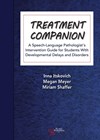
Treatment Companion: A Speech-Language Pathologist’s Intervention Guide for Students With Developmental Delays and Disorders
Written by experienced speech-language pathologists (SLTs) and described as a speech-language pathologist’s best friend, the Treatment Companion serves as a therapy guide for SLTs working with children and young people who have communication delays and/or disorders. The book is aimed...
A novel graft material for endoscopic tympanoplasty using the pre-tragal SMAS layer
The traditional biological graft materials for providing a scaffold for tympanic membrane reconstruction include temporalis fascia as well as conchal and tragal perichondrium/cartilage. This group from Taiwan present a novel graft option using the superficial musculo-aponeurotic system (SMAS) layer. They...
Prophylactic gastrostomy tubes in advance of chemoradiotherapy for advanced head and neck malignancies – are they worthwhile?
It is well recognised that radical chemoradiotherapy (CRT) for head and neck cancers can significantly affect swallowing, especially if radiotherapy is delivered to the hypopharynx and/or both sides of the neck. As such, prophylactic gastrostomy tubes are often advocated in...Audiology in this issue...IFOS Vancouver
Erica Zaia, MSc, Registered Audiologist, Certified in Vestibular Assessment and Management, Founder/Director, Audio-Vestibular Clinic, Vancouver, Canada. E: ericazaia@hotmail.com www.vestibular.ca ‘These unprecedented times.’ I believe that this is one of the most used sentences in the English language in 2020. And...Mapping the nose – first spatial map of olfaction published
Scientists at Harvard Medical School have created the first detailed map of smell receptors in the nose, catching up with similar achievements in sight, hearing and touch. The map reveals that smell receptors are highly organised into tight bands based on type. The findings provide foundational knowledge needed to develop better therapies for loss of smell.Monitored safe medical practice: minimising patient harm will reduce medical negligence bill for the NHS
Patrick Bradley ruminates on a celebrated career in ENT head and neck surgery and suggests that increasing the possibility of positive outcomes to contemporary patient safety initiatives by the NHS must involve efforts to develop an enthusiastic contented workforce willing...
Darn it! It’s going to take longer to get good at stapes surgery!
Traditionally, it has been said the learning curve for a particular operation lies between 20 and 30 cases. In stapedotomy, a surgeon is deemed successful and perhaps competent if closure of the air-bone gap (ABG) is reached to within 10dB...


