You searched for "MED-EL"
In conversation with Dr Eugene Myers: Education, training, and leadership in the modern era
It is an honour to hear from Dr Eugene Myers, who shares his experience with us, and his opinions and advice on the current circumstances for training and trainees. His energy, vitality and work ethic in his late 80s are...Bishop Berkeley and the Freireich experimental hypothesis
Our resident reporter at large tells us about two of his heroes, both of whom have quite clear merits and foibles. My patients just keep on getting better. You may well point out that under the care of a clinician...Embracing deafness and the silent world
Brian Kokoruwe shares his journey from growing up during civil war in Nigeria to becoming Director of Deaf UK Athletics and a published author. While I am active in the Deaf BSL community, involved in Deaf sports and the Government...
Sinus airflow after FESS using models and fluid dynamics
This is a very interesting study from Australia and New Zealand looking at flow of air into the nose and sinuses after FESS surgery. There is plenty of data regarding computational fluid dynamics for preoperative cases but not much for...The golden nose – reshaping the nose 100 years ago
Wolf Lűbbers (with the golden nose). Who with a crooked nose would not embrace the chance to go to bed in the evening wearing a surgical device and wake up the following morning with a straight one? And all this...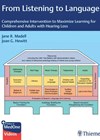
From Listening to Language: Comprehensive Intervention to Maximise Learning for Children and Adults with Hearing Loss
How does one build a two-storey house? Start with a firm foundation, followed by a strong structure. Only then can the floors and attic be added. Madell and Hewitt provide practitioners with this same blueprint to facilitate optimal outcomes for...
Cochlear implant electrode insertion technique
Atraumatic cochlear implant insertion techniques (so-called ‘soft surgery’) are now standard practice in most centres for all cases (no longer just for attempted hearing preservation cases). This has led to several studies examining cochlear trauma and electrode insertion force. In...
Role of potassium channel opener in salicylate induced tinnitus
The exact mechanism in the origin of tinnitus is not known. Many pharmacological agents have been tried to to treat tinnitus without great success. Aspirin is a commonly used medicine in the elderly population to reduce the risk of stroke...
Measuring is understanding: an unsupervised PROM clustering of CRS patients
It has been clear for quite some years, at least for anyone dealing daily with chronic rhinosinusitis (CRS) patients, that CRS is an ‘umbrella’ diagnosis. There are significant differences between patients, including different demographic data, different endoscopic and radiographic images,...
Seeking medical attention with tonsillectomy complications depends on who you are. Lessons from the USA
In the current UK model, NHS care is free at point of access so there are no perceived economic barriers to seeking attention with postoperative complications. This study from the US examines surgical and emergency room databases from across California,...
The power of (younger versus older) lips
The Directional into Velocity of Articulators (DIVA) model theorises that we require both auditory and sensory feedback - from our articulators - in order to ensure we are able to produce precise and powerful articulatory movements. This study aimed to...