
You searched for "testing"
Paediatric idiopathic sudden sensorineural hearing loss
This Turkish retrospective study looked at the radiological and clinical characteristics, prognostic factors and treatment outcomes in children diagnosed with idiopathic sudden sensorineural hearing loss (ISSNHL). Forty-eight children were included over an eight-year period. Complete recovery (CR) was achieved in...
Bone bridge conduction device for patients with bilateral microtia-atresia
Management of microtia-atresia requires a multidisciplinary approach. Children normally require bone conduction hearing aid devices very early in life to improve and facilitate speech and language development. At a later stage, when the cranial bones have strengthened and become thicker,...
Preoperative unaided maximum monosyllabic word recognition score as a predictor of CI outcomes
This retrospective study supports early intervention and hearing rehabilitation with hearing amplification for adults. The authors included 103 patients (128 ears), who had undergone cochlear implantation over a seven-year period, in this study. All patients had been assessed for their...
Supporting parents in improving their child’s hearing device use time
On the topic of supporting parents with improving their child’s hearing device time, The Hearing Journal recommends sharing a video from Hearing First (video provided online by Hear Jour; produced by www.hearingfirst.org) and provides a unique printable resource for parents...Call for consistent cochlear implant guidelines
A new global task force aims to create ‘living guidelines’ to set the standard of care for adult cochlear implantation (CI).
Earplug use in clubbers
Past studies show that there is a low frequency of use of earplugs at music events. In this research article produced by the National Acoustic Laboratories, Australia, a group of 51 regular attendees at music events were recruited and given...Professor Ray Clarke retires from NHS
At the end of May 2022, former ENT & Audiology News editor, Professor Ray Clarke, retired from NHS work. Despite his exhortations for ‘no fuss,’ colleagues and friends at Alder Hey Children’s Hospital, Liverpool, UK, where he worked as Consultant...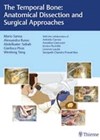
The Temporal Bone: Anatomical Dissection and Surgical Approaches
The Temporal Bone: Anatomical Dissection and Surgical Approaches does exactly what it says on the tin. It is an excellent combination of anatomical atlas and dissection manual for temporal bone surgical procedures, designed to be kept open at the benchside...
Evidence for diagnostic role of narrow band imaging in the outpatient setting for head and neck squamous cell carcinoma
Narrow band imaging (NBI) uses light in the blue and green spectrum to differentiate areas of carcinoma from normal or inflammatory tissue. This tertiary referral head and neck unit in Spain used white light endoscopy as initial screening for all...
Anticoagulated patients and epistaxis
This systematic review looks at the increasing complexity in this space as anti-thrombotics become more sophisticated and move away from the more well understood management of warfarinised patients. After a thorough search, 29 papers were found to be relevant and...
What is the evidence for contralateral tonsillectomy in TORS for known unilateral tonsil malignancy?
The concept of field changes by carcinogens within the upper aerodigestive tract is well established with reported rates of synchronous tumours of 4% and second primaries of 36%. The tonsil in particular has the highest rate of synchronous tumours, postulated...


