
You searched for "cranial"
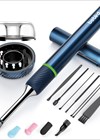
Patient-led wax and aural foreign body removal technology – is it safe?
As ENT and audiology professionals, wax impaction and aural foreign bodies are common presentations to our clinic that can cause significant distress to patients and can preclude diagnostic testing such as pure tone audiograms and tympanometry. We often advise patients...
The development of the Paediatric Arabic Auditory Speech Test for iPad
Speech in noise testing provides real-life assessments of hearing that conventional pure tones cannot deliver. Rania Alkahtani describes the development of such a test for Arabic speaking children. It also has the additional benefit of being able to be delivered...
Complications associated with microlaryngoscopy surgery
Microlaryngoscopy procedures are often considered to be routine procedures at the straightforward end of the ENT operative spectrum. Complications associated with this surgery are thought to be infrequent and primarily related to the possibility of dental trauma and adverse voice...The ENT operating theatre viewed down the retrospectoscope
We learn much of our future by looking at our past; Douglas MacMillan provides us with a fascinating glimpse into his years as a junior doctor. The operating theatre was a somewhat alien environment in the late 1960s: theatre sisters...
Microsurgical Management of Middle Ear and Petrous Bone Cholesteatoma
Several years ago, after being appointed as a consultant, my esteemed senior colleague entered my office and questioned why I was reading a textbook at that stage of my career, suggesting that I should be focusing solely on journals. Whilst...
Selective otolith dysfunctions objectively verified
Three cases of patients with acute onset vertigo are presented here. The presenting symptoms are described for each case along with the results of vestibular and audiologic examination. This paper focuses on the results of vHIT in the plane of...
Canal cholesteatoma
This is a retrospective study of patients with external auditory canal cholesteatoma (EACC) managed at a single tertiary centre from 1 January 2010 to 1 January 2021. Ninety patients (100 ears) were included. Mean age at diagnosis was 56+23 years....
Optimal timing of radiological follow-up in detection of cholesteatoma recurrence
This is a meta-analysis assessing the optimal timing of postoperative magnetic resonance imaging (MRI) for surveillance in detecting cholesteatoma recurrence. A systematic literature review of searches of articles between 2013 and 2024 in PubMed, Embase and Cochrane were conducted according...Technological advances in hearing aids and their significance for people with hearing loss during a period of more than 100 years
Over a century of progress in hearing aid technology has transformed the lives of those with hearing impairments. From the bulky, conspicuous devices of the past, to today’s sleek, AI-powered solutions, this article explores the three key eras of development....


