
You searched for "screening"
Lyric 24/7 hearing: could it help those with tinnitus?
About Lyric Hearing Since its launch in 2008, Lyric represents the first and only device of its kind establishing a new category of hearing solution: 24/7 extended wear. Lyric is placed several millimetres within the ear canal, near the tympanic...
Cochlear Implants - Basic Textbook
The book has been written by the sole author Dr Sandro Burdo MD. He is based at the Circolo Hospital in Varese where he has established his practice and wealth of experience. As the title indicates, this is an encompassing...
CT-scan instead of rigid bronchoscopy in paediatric foreign body aspiration?
Many centres would still use rigid bronchoscopy as the gold standard for possible foreign body aspiration (FBA) in children. Evidence is growing that CT scanning in these situations is a reliable alternative, especially as rigid bronchoscopy (RB) still carries a...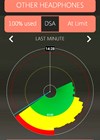
How loud is too loud? Smart ways to monitor noise exposure through your headphones
As an audiologist, an increasingly common concern patients have is noise exposure from their headphones and how it will impact their hearing over time. It’s a legitimate worry considering the average adult is streaming audio content on their mobile devices...
Talking through technology – keeping up with the mainstream
Augmentative and alternative communication (AAC) system development has often made early use of innovative technology. Touch screens have been a part of this technology for some time. In fact, touch screens were invented in 1965 but it wasn’t until the...MED-EL launches the world's first Totally Invisible Cochlear Implant
Hearing implant company MED-EL has launched TICI UNICO, the world's first and only commercially available cochlear implant with all components, including the microphone, implanted beneath the skin. It provides people with severe-to-profound sensorineural hearing loss around-the-clock access to sound, even...Cancer genetics and signalling pathways in ENT – a review and discussion of how this can be applied to rare tumours
Introduction Cancer cases continue to increase worldwide, and head and neck cancer is a major global health issue, with an estimated global burden of over 630,000 new cases and over 350,000 deaths per year [1]. The term ‘head and neck...
The effect on taste buds due to severing of the chorda tympani nerve
The long-term histological effect on taste buds following cutting of the chorda tympani in humans is not clear. Confocal laser scanning allows in-vivo examination of the same group of taste buds and is aiding our understanding of why patients recover...
Facial Landmark localisation by curvature maps and profile analysis
The detection of three dimensional (3D) landmarks by scanning surfaces is a well established method in medical science. Anatomical landmarks are visually or palpably detectable and act as reference points for clinical measurements. When measuring these landmarks with a sliding...
What do SLTs do in palliative care?
The authors of this article highlight that the number of older people has increased significantly in the last two decades, and the number of people over 85 has doubled in Australia since 1996. They attribute this to improved lifestyle factors...


