
You searched for "sounds"
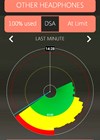
How loud is too loud? Smart ways to monitor noise exposure through your headphones
As an audiologist, an increasingly common concern patients have is noise exposure from their headphones and how it will impact their hearing over time. It’s a legitimate worry considering the average adult is streaming audio content on their mobile devices...Sound of Metal: an evocative look at the deaf community and cochlear implantation in adults
Sound of Metal is an American drama movie, co-written and directed by Darius Marder, which tells the story of a drummer who suddenly loses his hearing. The film was highly praised, receiving great acclaim for performances from Paul Raci and...UK universities get £2.2m for aural diversity research
The University of Salford, in collaboration with Goldsmiths, University of London, has been awarded up to £2.2 million in funding for a groundbreaking initiative aimed at advancing research in hearing.In conversation with Diana Terry: Winner of the ‘What Does Sound Look Like to You?’ art competition
The ‘What Does Sound Look Like to You?’ art competition, supported by ENT & Audiology News and Manchester Art Gallery, attracted many impressive entries! They were judged by HUGS Chair, Richard Bircher, along with Fiona Corridan, curator of Grayson’s Art...Rehabilitation of single-sided deafness with cochlear implants
The relatively recent emergence of cochlear implantation as a potential means of restoring hearing to a deafened ear, in the presence of normal hearing in the other ear, has proved an exciting and yet surprising development. James Tysome explores the...Management of single-sided deafness in adults: a bone conduction solution
Single-sided deafness (SSD) presents a limited number of methods for management, and not all of them meet the patient’s expectations. The aim of this article is to set out the available bone-conduction treatment methods for managing single‑sided deafness in adults....
Why do some people get their smell back so quickly after a COVID infection whilst others don’t?
Of course, we are all too familiar with the effect that COVID-19 infection has on our sense of taste and smell, but why do most patients get better whilst, for many, the misery lingers on and on? This paper looks...


