
You searched for "aural"

993 results found

Listening in noise to predict learning disability

Noise disrupts the neural coding of consonants more than vowels. Listening in noise presents a challenge for everybody, but particularly to children whose language skills are underdeveloped. This team views background noise as a disruption to the necessary neural mechanisms...
Ageing Ears

How do our ears show our age? We are all aware of the concept of presbycusis and a plethora of other events that impact our hearing over the passage of time. We are familiar with the standard subjective testing, though...

Expectations and practice

Reading this paper is reassuring. It does not appear to be groundbreaking in its results but research can be as useful, if not more so, when it consolidates knowledge and helps unify the research base. This paper focuses on those...

The importance of s-ABR in auditory disorders

S-ABR is a method of recording speech-evoked-potentials, but where does it fit in the clinical and research test battery? Here, the authors examine the opportunities for s-ABR. The integrity of the neural transmission of acoustic stimuli is evaluated by auditory...

Smart cochlear device: how biosensors could revolutionise hearing care

Smart cochlear implants could monitor inner ear health, deliver drugs and adapt in real time, merging biosensing, microfluidics and personalised hearing care. From passive hearing aids to smart implants Hearing technology has advanced dramatically over the last few decades, yet...
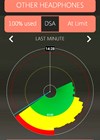


How loud is too loud? Smart ways to monitor noise exposure through your headphones

As an audiologist, an increasingly common concern patients have is noise exposure from their headphones and how it will impact their hearing over time. It’s a legitimate worry considering the average adult is streaming audio content on their mobile devices...

Current considerations on neural development and hearing loss in young children

The young child’s brain has the ability to change in response to new stimuli, resulting in learning, the foundation of adaptive and intelligent behaviour. For children with hearing loss, a reduction or lack of auditory stimuli can have a ‘lifelong...

Embracing the changes prompted by lockdown

March 2020 introduced the concept of lockdown to audiology services in the NHS, prompting a rethink of how to best provide hearing care. In this issue, we hear from Hanna Jeffery, a Clinical Scientist working at the Royal Glamorgan Hospital...

Universal newborn hearing screening: a global health perspective

Intuitively, as health professionals, we know that universal newborn hearing screening (UNHS) makes sense. Bolajoko Olusanya outlines how UNHS fits in with global health priorities, as well as illustrating how such programmes can help to deliver additional benefits to communities....

Head and neck cancer awareness

Head and neck cancer is one of the most preventable cancers, and awareness and screening campaigns have shown a decline in its incidence. Support for campaigns of awareness and education about these cancers is crucial from professional, societal and governmental...

Aboriginal and Torres Strait Islander ear health in the 2020s

The world is in the midst of a pandemic, and global health is severely threatened by this novel coronavirus which has caused over three million infections of COVID-19 and claimed more than 228,000 lives to date*. Societies and health systems...

Developing ENT and audiology services in Southern Africa (Part 2)

In the last issue of ENT & Audiology News, we heard from retired Professor Christopher Prescott on the challenges faced and progress made made locally to address the inequity and inequality of access to ENT and allied health professional services...
