
You searched for "APD"
TEN testing in paediatric patients
Threshold equalising noise (TEN) testing is used to identify dead regions (DRs) of the cochlear. Alexandra Lusty considers the challenges of using the TEN test in the paediatric population as well as the importance of identifying DRs. Diagnosing dead regions...Global audiology during COVID-19
The COVID-19 pandemic has affected, and in some areas, put a complete hold on, audiology practice around the world. In April 2020, during the peak of the pandemic for many regions, our audiology Global Ambassadors provided their reports from their...New Visual Reinforcement Audiometry solution from Interacoustics
Interacoustics is happy to release VRA Pure, a software version of the digital Interacoustics VRA Screen solution.Export data directly to Noah from OtoAccess® Database
Together with OtoAccess®, Interacoustics is happy to introduce a new updated version of their popular OtoAccess® Database.Interacoustics introduces ACT™ on Callisto™
Interacoustics is excited to announce that the game-changing Audible Contrast Threshold test (ACT) is now available with the Callisto. This means that Callisto users can address the number one complaint from people with hearing loss: hearing in noisy situations. ACT...
Audiology Diagnosis – Third Edition
Audiology Diagnosis – Third Edition is a comprehensive textbook that provides an in-depth overview of diagnostic audiology. Covering topics such as pure-tone audiometry, speech testing, vestibular assessment, tinnitus evaluation and tele-audiology, the book offers a broad and detailed exploration of...Out of Africa: Audiovannah audiology clinic in Zimbabwe
Audiovannah reception area. In 2015 two Danish audiologists, Jenny Pedersen and Nicolai Pedersen, relocated to Zimbabwe and opened a full service audiology clinic (Audiovannah) in the capital city of Harare. The focus has been to give back as much as...The use of social media to drive practice growth
Cliff Olson is the most successful user of social media in the hearing care industry as of the date of this publication. His videos have been viewed worldwide, and he has more YouTube followers than all the major hearing aid...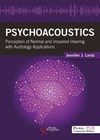
Psychoacoustics: Perception of Normal and Impaired Hearing with Audiology Applications
The field of psychoacoustics and the practice of audiology have always been curious bedfellows. In the clinic, we commonly assess patients’ hearing ability through pure-tone detection, a classic psychoacoustical phenomenon, but just one of the many, many ways in which...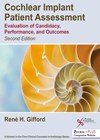
Cochlear Implant Patient Assessment: Evaluation of Candidacy, Performance, and Outcomes – Second Edition
The second edition of Cochlear Implant Patient Assessment aims to become a point of reference for all professionals involved in assessing cochlear implant candidacy and interested in broadening their knowledge to maximise the hearing capabilities of their patients. This book...
Incidental thyroid nodules: should we observe or operate?
Thyroid nodules are extraordinarily prevalent, detected by physical examination in 7% and by imaging studies in 67% of the population. Although most of these nodules are benign, up to 20% are found to be malignant on excision. It’s a very...


