
You searched for "reinnervation"
Have we reached our limits in endoscopic skull base surgery?
As being an anterior skull base surgeon becomes the aspiration of many ENT trainees, Professor Nicolai gives his personal insights into the future for this exciting subspeciality. Having been directly involved in the evolution of transnasal endscopic surgery (TES) since...Amplifon’s $2 billion move into manufacturing: what it means for audiology
Our audiology editor Yovina Khiroya writes: Amplifon, the world’s largest hearing aid retailer, has announced a reported $2 billion acquisition of GN Hearing, the company behind ReSound, Beltone and Jabra Enhance. While headline-grabbing, the strategic implications are arguably more significant than the deal value itself.
Future practice: tele-rehabilitation in speech and language therapy
It is known that our population is ageing, resulting in an increase in the number of people living with progressive neurological conditions such as Parkinson’s disease. Health services endeavour to deliver specialist and personalised care to all these people, often...Barriers and facilitators to app use in Australian audiology clinics
Too old to app? Time to think again! Bec Bennett discusses why it’s time for healthcare professionals to hit reset on expectations of digital literacy. Mobile health (mHealth) apps have the potential to enhance audiological care by supporting the self-management...Signia introduces MaX: world-first AI hearing aid platform powered by four DNNs
Hearing aid innovator Signia, part of WSA, has launched Multi-adaptive Xperience (MaX), a world-first hearing aid platform powered by Acoustic Intelligence™. The technology combines four Deep Neural Networks (DNNs) to analyse speech, background noise, the listening environment and the wearer’s...Current considerations on neural development and hearing loss in young children
The young child’s brain has the ability to change in response to new stimuli, resulting in learning, the foundation of adaptive and intelligent behaviour. For children with hearing loss, a reduction or lack of auditory stimuli can have a ‘lifelong...
Managing CRS in pregnancy
An International team of experts from both sides of the Atlantic set out to perform a systematic review of the management of chronic rhinosinusitis in pregnancy. Despite a thorough search no scientific evidence was found that could form the basis...Endoscopic arytenoid abduction lateropexy for bilateral vocal cord paralysis in neonates
We are delighted to publish a further update on the use of the technique for vocal fold lateralisation in neonates from Laszlo Rovo and Shahram Madani, who have previously informed us of this new technique [1]. These cases are rare...
Parental role in childhood speech disorder intervention
Several studies have indicated that parents play an effective role in the management of early communication disorders like stuttering and language delay in children, especially when they are supported by clinicians. This comprehensive review attempted to study published literature regarding...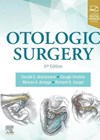
Otologic Surgery - 5th Edition
Otologic Surgery 5th Edition, edited by Derald Brackmann, Clough Shelton, Moises Arriaga and Richard Gurgel, is a textbook masterpiece. The book is written in tribute to the editors’ mentors: Drs Howard House, William House and James Sheehy, whose pioneering work...Development of a new negative-pressure ventilatory support device: Exovent
The pandemic has driven innovation in ways that we have not seen for many decades. Intensive care medicine and ENT have been at the forefront of these advances, and our good friends David Howard (never one to put his feet...


