
You searched for "gender"
In conversation with Helen and De Wet in Paris: cochlear implants in the year 2074
The World Congress of Audiology (WCA), held in Paris, France, in September 2024, provided a fantastic opportunity to reconnect with colleagues from around the globe. I took the chance to sit outside in the sunshine with De Wet Swanepoel from...Robert Vincent: otologie sans frontières
Chris Aldren speaks to French ear surgeon Robert Vincent who’s particularly proud of forming a global otologist network providing free resources for education and patient care worldwide. Robert Vincent Robert, who have been your otological mentors? I did my initial...Robert Vincent: otologie sans frontières
Chris Aldren speaks to French ear surgeon Robert Vincent who’s particularly proud of forming a global otologist network providing free resources for education and patient care worldwide. Robert Vincent Robert, who have been your otological mentors? I did my initial...How to tell if a bone anchored hearing device is working?
Bone anchored hearing aids are becoming increasingly more commonplace with more than 120,000 users worldwide. These devices are based on the principle of direct bone conduction, where sound is transmitted directly through the skull via a titanium implant to the...Wireless accessories for hearing aid users: putting the ‘soul’ back into hearing – a case study
The following case study reports on the experiences of a hearing impaired National Health Service (NHS) patient who was given Bluetooth accessories as part of a study into their benefits when used with hearing aids [1]. The name of the...European power women in otolaryngology: a focus on Laura Viani, Ireland’s first female otolaryngologist
Professor Laura Viani is a Consultant Otolaryngologist at Beaumont Hospital and Temple Street University Children’s Hospital and has been a member of Council of the Royal College of Surgeons of Ireland for the last 17 years. As the first female...The challenge of disrupting the hearing care market in the USA
Barry Freeman, an Audiology Consultant of extensive global experience, examines the business model of hearing care service delivery in America. He discusses the challenges the profession has faced, and proposes some food for thought on learning from other health care...Cognitive spare capacity: what is it and why does it matter?
Cognition refers to thinking and memory. So why would cognition be a useful concept for ENTs and audiologists? Audition provides our main channel of communication and when we speak to each other, we want to exchange thoughts and remember what...Being comfortable with the uncomfortable: ENT emergency simulation
When uncommon emergencies create uncertainty, simulation-based training offers a safe space to build confidence, competence and collaborative learning. ENT emergencies can be daunting to manage, especially for those who have less familiarity with their nature. Colleagues from neighbouring specialties are...Comparing AutoREM accuracy to NAL-NL2 targets: real patient data and simulator verification
A new study examines how accurately AutoREMs from four major brands hit NAL-NL2 targets, revealing strengths, limits and clinical implications. Automatic real ear measurements (AutoREMs) have emerged as a promising way to make hearing aid fittings faster and more consistent....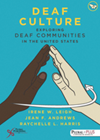
Deaf Culture: Exploring Deaf Communities in the United States
This book is intended as an introductory text for those studying deaf studies or American Sign Language in the USA. It is written by a mix of deaf and hearing authors and perhaps some of its shortcoming in feeling like...


