
You searched for "testing"

Precision medicine in allergic rhinitis and chronic rhinosinusitis
Precision medicine (PM) with its ‘four Ps’ (personalised, predictive, preventive and participatory) is about appreciating differences between individuals when offering management options for health problems. Multiple groups interested in rhinology such as EPOS and ARIA supported a review of the...Entrepreneurial aspirations for the otolaryngologist
Entrepreneurship is a process of identifying an idea and starting a business venture with this idea. It requires generation of a business model or plan that emphasises the value proposition for the customer. The model must identify the partners, resources,...Global health missions – not just for consultants. A guide for trainees.
Lulu Ritchie is a courageous and driven trainee in London, inspired by humanitarian missions but conscious of the usual requests for consultant level doctors. Lulu didn’t let that hold her back. She found a way and has kindly summarised her...A career in audiovestibular medicine: trainee perspectives
Trainees and consultants share insights into audiovestibular medicine, a UK specialty treating hearing loss and balance disorders through multidisciplinary care. Audiovestibular medicine (AVM) is a hidden gem among medical specialties. To provide an insider’s perspective, we interviewed current AVM trainees...EUHA 2026
"October marks a special anniversary – the EUHA Congress turns 70! To mark the occasion, the format will be refined this year, creating a modern, forward-looking setting for the anniversary. The 70th International Congress of Hearing Aid Acousticians will be...The business of audiology: unbundling
Many professions, such as law, accounting, engineering and some areas of healthcare charge hourly rates in a fee-for-service model. Administratively, this can be a challenge to track hours, bill clients/patients, and collect payment, but this does lend toward greater transparency...VACANCY: Lecturer/Senior Lecturer in Audiology
You would work as part of a team and primarily deliver high quality teaching and training across a range of programmes based on your area of specialismUnderstanding the NAL-NL3 Prescription System: a new era of personalised hearing aid fitting
The NAL-NL3 system marks a transformative step in hearing aid fitting, shifting from a one-size-fits-most prescription to a modular, patient-centred approach. Developed by the National Acoustic Laboratories, this new system integrates a core audiogram-based prescription with targeted modules to address...Thoughts on war: von Clausewitz revisited
We few, we happy few, we band of brothers; For he to-day that sheds his blood with me Shall be my brother; be he ne’er so vile, This day shall gentle his condition: And gentlemen in England now a-bed Shall...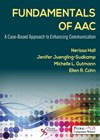
Fundamentals of AAC – A Case-Based Approach to Enhancing Communication
A comprehensive text that will appeal to speech and language therapists at all stages of their careers, from undergraduate through to seasoned professionals working directly in the field. Despite there being 64 contributors (mostly from the US), the editors have...


